
The chain is never just a background detail. It affects how a piece drapes, how it feels against the skin, how much it costs to produce, and whether it will hold up to the product’s intended style. For brand designers and buyers, a clear understanding of jewelry chain types is a practical advantage, as it shapes better product decisions from the very first SKU.
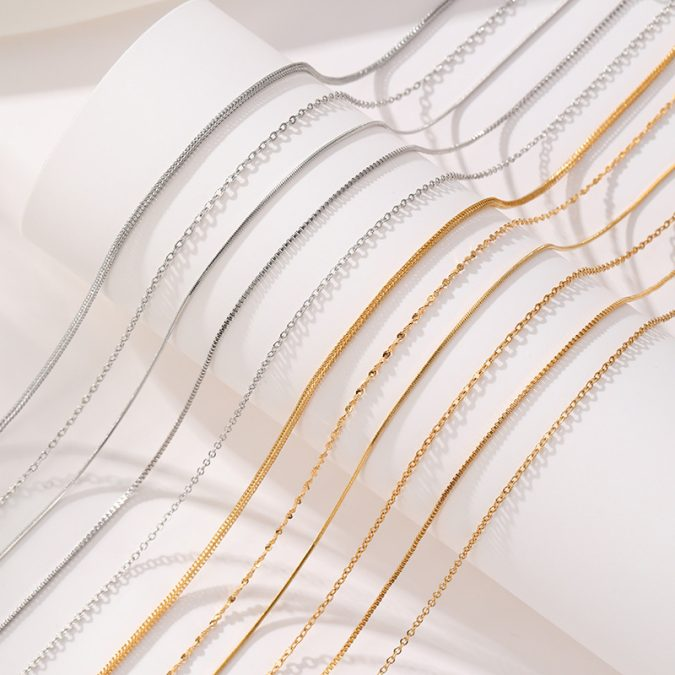
Common Jewelry Chain Types
1. Cable Chain
The cable chain is the most fundamental structure in jewelry. It consists of uniformly sized oval or round links, each connected one after another in a simple interlocking sequence. The result is a clean, symmetrical chain with no directional preference that lies the same way from every angle.
Due to its neutrality, the cable chain is the go-to foundation for pendant necklaces and charm jewelry. It doesn’t compete with what it carries. It’s also one of the most cost-efficient options to produce at scale, making it a reliable workhorse for entry-level and mid-range collections. Brands launching a core chain line almost always start here.
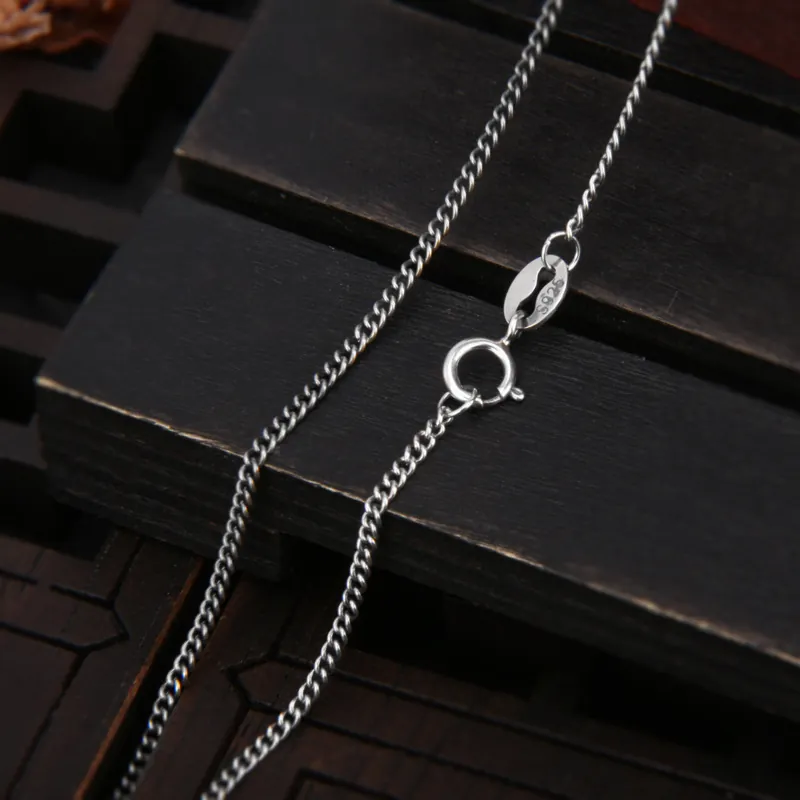
2. Curb Chain
A curb chain looks like a cable chain. But the links are twisted and flattened so they all lie uniform and parallel when worn. That flat surface catches and reflects light in a way a round-link cable chain doesn’t, giving curb chains a bolder, more distinctive appearance.
Heavy-gauge curb chains (often called Cuban links) have become a streetwear and men’s jewelry staple. Thinner curb chains work well in women’s layering collections. Either way, they are strong, resistant to kinking, and easy to repair, which makes them a practical choice for everyday wear products. A brand that wants to cover both fashion-forward and durable-everyday positioning can do a lot with curb chain variations alone.
3. Figaro Chain
The Figaro is recognizable by its pattern: one longer, oval link alternates with two to five shorter round links, all twisted flat in the same curb-chain style. It’s a chain with personality and more visual interest than a plain curb, while still being clean and structured.
Historically associated with Italian design, the Figaro chain carries a classic, slightly masculine energy that translates well across pendants, charms, and standalone wear. Brands targeting heritage or Mediterranean-inspired aesthetics often feature it prominently. It works with heavier pendants like crosses or medallions and holds its shape reliably.
4. Rope Chain
The rope chain is formed from twisted links connected in pairs or threes, creating a continuous spiral that genuinely resembles a twisted rope. The surface is textured, dimensional, and highly reflective.
Among all chain styles, rope chains are one of the most consistently popular globally. They can be worn alone as a statement or with a pendant. Rope chains carry a sense of luxury and substance that elevates the perceived value of a product, which is why they appear across everything from mid-range fashion brands to high-end collections.
5. Box Chain
Box chains are built from square, flattened wire links connected at right angles, creating a smooth, continuous geometric structure. The profile is crisp and architectural, and it maintains a clean, structured profile and holds its shape well.
The box chain suits minimalist and contemporary brand identities. It’s clean geometry reads as modern and precise. It performs well as a choker, a standalone piece, or as a pendant chain for slide-style pendants. Because the surface is smooth and flat, it photographs particularly well, which matters for e-commerce-focused brands.
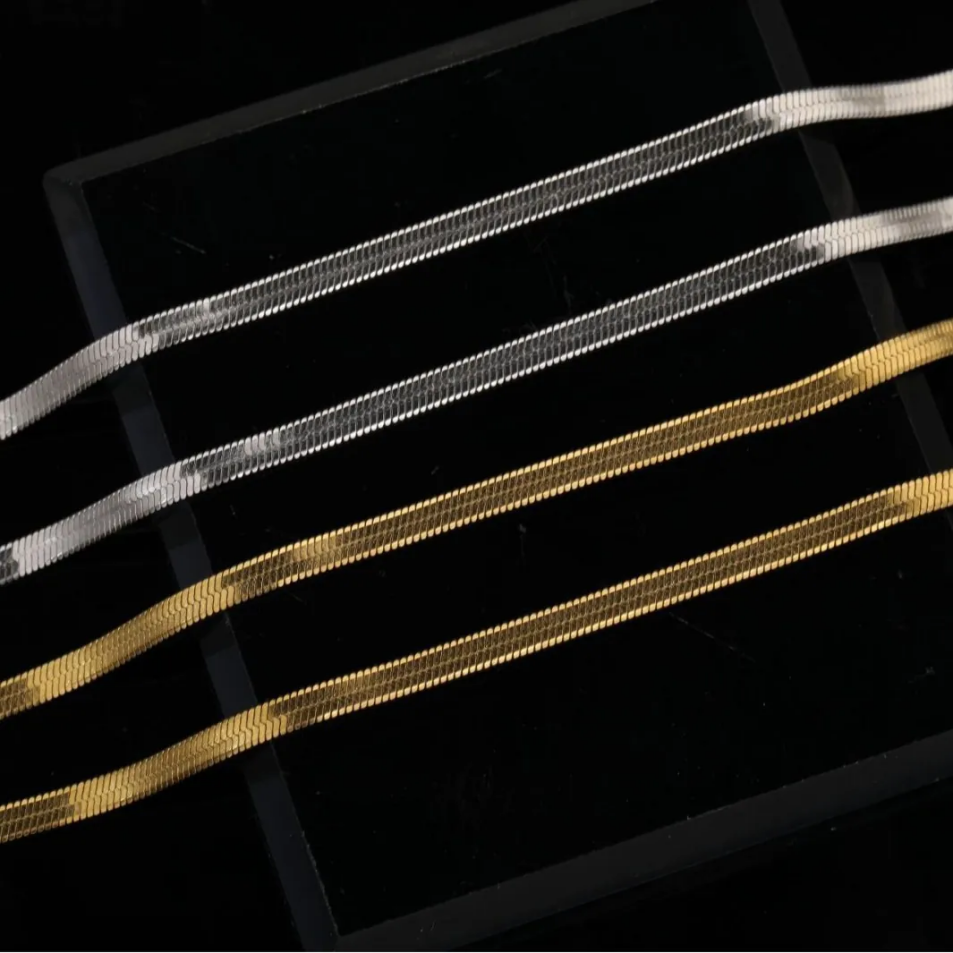
6. Snake Chain
A snake chain has visually distinctive structure. Tightly joined rings are machine-assembled into a smooth, flexible tube with a subtle zigzag texture along the surface which is reminiscent of snakeskin. The result is a seamless, fluid chain with an almost liquid drape against the skin.
Snake chains suit slide pendants and charm beads well, as the smooth surface allows elements to glide freely along the chain. They are a strong fit for fashion-forward and minimalist collections. One important consideration for brands: snake chains require careful handling during production and wear. A sharp kink is difficult to remove cleanly, so this chain works best in collections where the customer is style-conscious rather than rough on their jewelry.
7. Lariat Chain
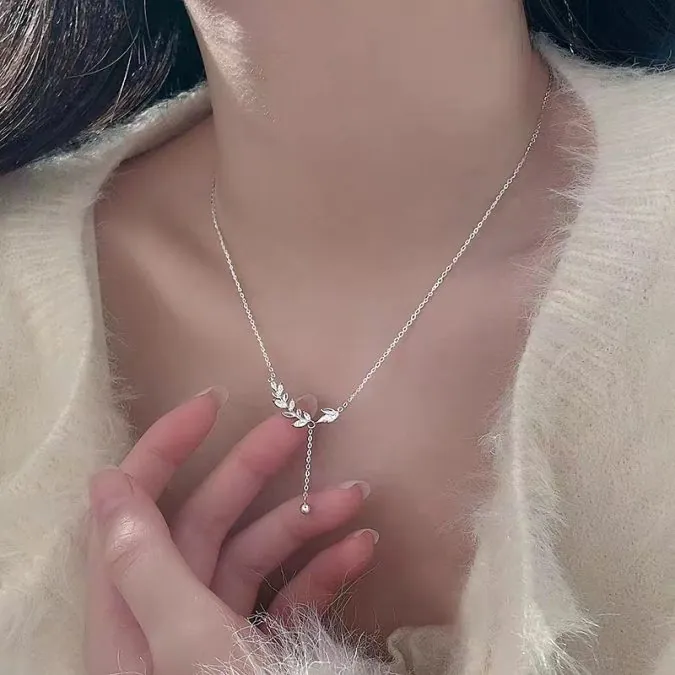
The lariat is not a traditional chain style so much as a jewelry format — a long chain, often made without a clasp, designed to be looped, knotted, or draped through a ring or bar at one end. The versatility of the form is its biggest appeal: one piece can be worn multiple ways.
Brands targeting fashion-forward, experience-driven customers use lariats to add flexibility to a collection without adding SKUs. A lariat with a quality rope or snake chain body, finished with a distinctive end charm or tassel, can become a signature piece for a label. It works well in bohemian, contemporary, and elevated casual aesthetics.
8. Wheat Chain Necklace
The wheat chain necklace, also known as the Spiga chain, is formed from V-shaped, interlocking oval links that all point in the same direction, creating a tightly braided structure that resembles a stalk of wheat. The profile is round and dense, with a fine texture that catches light uniformly.
Among pendant chains, the wheat chain necklace is one of the most reliable performers. It is strong, flexible, and resistant to tangling, and its structure supports heavier pendants well without compromising drape. The look is more complex than a cable chain, but not as bold as a rope. It suits brands aiming for understated refinement and appeals across gender and age demographics.
9. Bead Chain
The bead chain, sometimes called a ball chain, consists of small, identical round balls connected by short rod segments. It has a distinct, uniform rhythm along its length and a more casual, understated quality compared to link-based chains.
Bead chains are commonly used for dog tags, pendants with a utilitarian edge, and fashion pieces targeting the casual or youth segment. They are lightweight, cost-effective, and work well for adjustable-length designs. Brands building accessible collections at volume often include bead chains as a practical, low-cost option.
10. Water Wave Chain
The water wave chain is a flat, flexible chain built from tightly interlocked curved links that create a continuous ripple or wave effect across the surface. It lies flat against the skin with exceptional fluidity and produces a striking light reflection due to its undulating structure.
This chain type sits at the intersection of texture and minimalism. It has visual complexity without visual weight. Brands targeting the contemporary women’s market, particularly those with a focus on layering, find water wave chains a compelling option for both standalone wear and as a refined pendant base.
Jewelry Chain Types at a Glance
| Chain Type | Structure | Weight Profile | Best Use Case | Style Association |
| Cable | Uniform interlocked oval links | Light to medium | Pendant chains, everyday basics | Classic, neutral, versatile |
| Curb | Flattened, twisted uniform links | Medium to heavy | Statement wear, layering, men’s | Bold, modern, streetwear |
| Figaro | Alternating long-short flat links | Medium | Pendants, charms, standalone | Italian-inspired, classic |
| Rope | Twisted spiral links | Medium to heavy | Statement or pendant chain | Luxurious, timeless |
| Box | Square geometric links | Light to medium | Minimalist pendant chains, chokers | Modern, architectural |
| Snake | Tightly joined rings in a smooth tube | Light to medium | Slide pendants, solo wear | Sleek, fashion-forward |
| Lariat | Long loop format, various structures | Varies | Multi-wear, statement pieces | Bohemian, contemporary |
| Wheat | Braided V-shaped oval links | Medium | Pendant chains, everyday elegance | Refined, sophisticated |
| Bead | Uniform balls on rod segments | Light | Casual, tags, youth segment | Casual, utilitarian |
| Water Wave | Rippled interlocked flat links | Light | Layering, contemporary wear | Modern, feminine |
Source Your Chain Collection with Star Harvest
Getting the chain right is only half the equation. The other half is finding a manufacturer who can deliver it consistently, at the width, finish, and volume your collection demands.
Star Harvest is an OEM jewelry manufacturer based in China with over 20 years of experience in brass and stainless steel jewelry production for global brands. Our chain customization capability covers all major styles: cable, curb, snake, wheat, rope, box, bead, and more.
Our necklace customization comes standard with break-resistant 7-strand twisted copper-core steel chains, offering a load capacity of up to 15 kg, with custom lengths controlled to a tolerance of ±0.5 cm. We also support 3D precision casting for pendants (with a minimum size of 0.8 cm for complex designs), along with custom development of extension chain components to match your collection requirements.
Whether your next collection calls for a refined wheat chain necklace in brushed gold, a bold snake chain necklace with PVD black finish, or a full capsule across five chain styles, we are in place to make it happen.
Contact Star Harvest for a custom quote on your next chain collection.

