
Rhodium plated jewelry has moved from a specialty finishing option to a commercial expectation. Shoppers often associate that bright, almost liquid-mirror white surface with luxury. If you are evaluating rhodium plating for an upcoming collection, this FAQ cuts through the noise and gets straight to what matters for product development and sourcing decisions.
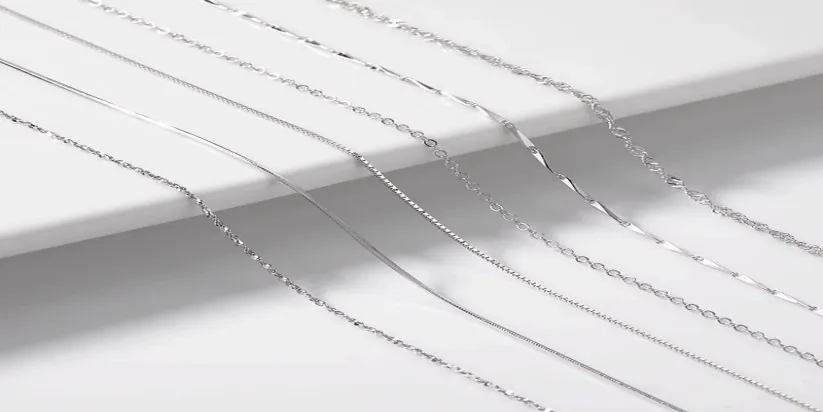
What Is Rhodium Plating?
Rhodium is a rare precious metal from the platinum group, and also one of the most expensive on the periodic table. Since solid rhodium is too brittle and costly to use as a structural material, it works best as an ultra-thin surface coating applied through electroplating.
The process is straightforward in principle: the jewelry piece is submerged in a rhodium plating solution, a liquid bath containing rhodium salts, usually rhodium sulfate, mixed with acid. The piece is connected to the negative electrode, and a positive electrical current passes through the solution, causing rhodium ions to bond onto the jewelry’s surface and deposit a uniform layer of rhodium metal.
As a result, rhodium gives jewelry a highly polished look, shields the metal underneath from scratches and tarnish, and, in the case of white gold, creates the crisp, bright white color that consumers associate with premium pieces.
How Long Does Rhodium Plating Last?
The answer to this question depends on two variables: micron thickness and jewelry type.
A typical rhodium-plated layer for jewelry ranges from 0.1 to 2.0 microns thick. A thicker coat enhances protection against scratches and tarnish. But durability must be balanced against cost, since rhodium is among the most expensive precious metals.
Jewelry type matters just as much as thickness. For jewelry pieces such as earrings and pendants that are more sheltered, a thickness of 0.10 to 0.50 microns is acceptable. For rings and other pieces exposed to rough wear, 0.75 to 1.0 microns is common.
One thing worth knowing: rhodium is significantly harder than gold. Rhodium features a Mohs hardness of around 6, making it substantially harder than gold at approximately 2.5 to 3, and silver at around 2.5. This translates directly into better scratch resistance. Compared to standard gold plating, rhodium plated jewelry is simply tougher at the surface level.
Is Rhodium Plated Jewelry Safe for Sensitive Skin?
Yes. This is one of rhodium’s most commercially useful properties. Responsibly sourced rhodium does not trigger skin reactions. It creates a protective barrier between potentially allergenic metals and the skin.
For brands targeting customers with known sensitivities, or those building a line marketed as skin-safe, the hypoallergenic nature of responsibly manufactured rhodium plated jewelry is a genuine product benefit.
What Base Metals Work Best with Rhodium Plating?
From a fine jewelry standpoint, sterling silver and white gold are the traditional candidates. But for jewelry brands building commercial lines at scale, brass is the base metal that delivers the strongest ROI.
Brass is affordable, structurally stable, and accepts rhodium plating well when properly prepared. Rhodium-plated brass jewelry offers a bright, reflective finish and the durability to withstand tarnishing and corrosion.
For brands targeting accessible price points without compromising on aesthetic, rhodium plated brass jewelry is the industry’s open secret for delivering a premium look at a cost-effective price.
Which Manufacturer Should Handle Rhodium Plating for My Line?
The difference between high-quality and poor rhodium plating is invisible to the naked eye — until it fails. Inconsistent micron thickness across a batch, contaminated plating baths, insufficient surface preparation: none of these show up at first glance, but they all show up within months of customer wear.
At Star Harvest, we operate our own in-house electroplating facility, equipped with both vacuum plating and water-based plating technologies. Nano-level control over plating thickness ensures consistency across batches, while the proprietary SH-DD electroplating standard enhances bonding strength by over 30%. Additional advanced finishes, including laser plating and gradient plating, are also available.
We also utilize coating thickness gauges for precise measurement and verification. Our 18K palladium-rhodium alloy coating delivers a mirror-like, cool white finish, while the 14K light platinum option offers a distinctive blue-white luster popular in Korean-inspired designs.
Furthermore, all finishes are enhanced through custom gold plating services and comply with EU nickel release standards (<0.2 μg/cm²/week), ensuring both durability and skin safety for end customers.
What Does Rhodium Plating Cost Per Piece?
There is no single answer to this one, and any manufacturer who gives you a flat price without reviewing the design first is not doing the math properly. Per-piece cost depends on three variables:
Surface area of the design. A wide cuff bracelet requires far more rhodium than a slim pendant. More surface area means more rhodium consumed per piece, which feeds directly into unit cost.
Micron thickness specified. Thicker plating means more precious metal per piece. The difference between 0.5 and 1.0 microns is a material cost increase that compounds across thousands of units.
Global rhodium spot price. Rhodium prices can be volatile. In 2021, rhodium hit $29,000 per troy ounce, before stabilizing in the $4,000–$5,000 range by early 2025.
The good news: at the micron thicknesses used in jewelry (well under 1.0 microns per piece), the actual rhodium volume per unit is tiny. The cost impact is real but manageable, and the perceived value it adds to the end product consistently justifies the spend.
Ready to get an accurate quote from jewelry manufacturer? Contact Star Harvest with your design, target micron specification, and estimated order volume, and our team will work through the numbers with you.

