
A clasp is never JUST a clasp. It is the last thing a customer touches before they put on a piece, and the first thing they blame when something goes wrong. The right choice affects wearability, return rates, and how premium a line feels.
This article breaks down two of the most common options, the spring ring clasp and the lobster claw clasp, so jewelry brands can make more informed sourcing decisions.
Spring Ring Clasps: Advantages & Limitations
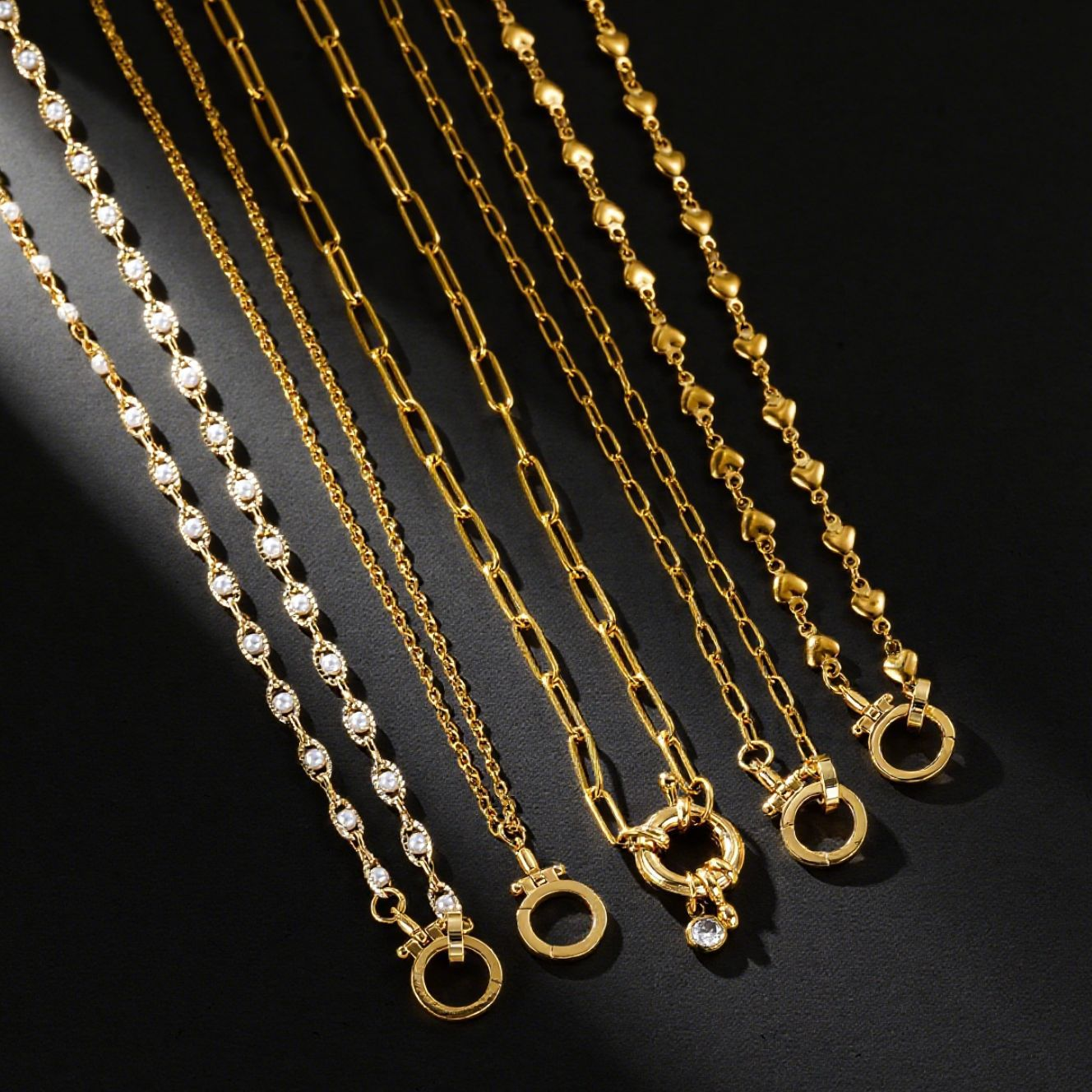
A spring ring clasp is a hollow, circular metal tube with a small spring-loaded lever on one side. When a wearer presses that lever, a gap opens in the ring, allowing it to hook onto a jump ring or chain end. Release the lever, and the internal spring snaps it shut.
Advantages
Its main commercial appeal is cost. Small spring rings are light and inexpensive. It is not uncommon to find spring rings for just a few cents and 14K or 18K gold spring ring clasps for under $5 a piece. That economy makes them a natural fit for high-volume fashion jewelry lines, pearl necklaces, and delicate pendants.
Their smaller, more discreet profile also blends well in fine or lightweight jewelry pieces and they are less likely to roll to the front of a necklace compared to heavier alternatives.
Limitations
The limitations are real, however. If a wearer has long nails, arthritis, or limited hand dexterity, spring rings can genuinely test patience. Additionally, the tiny spring can wear out over time, meaning the clasp may fail to close firmly with extended use. For brands targeting elder demographics or customers who wear jewelry daily, this is a product risk that often shows up in after-sales complaints.
Lobster Claw Clasps: Advantages & Limitations
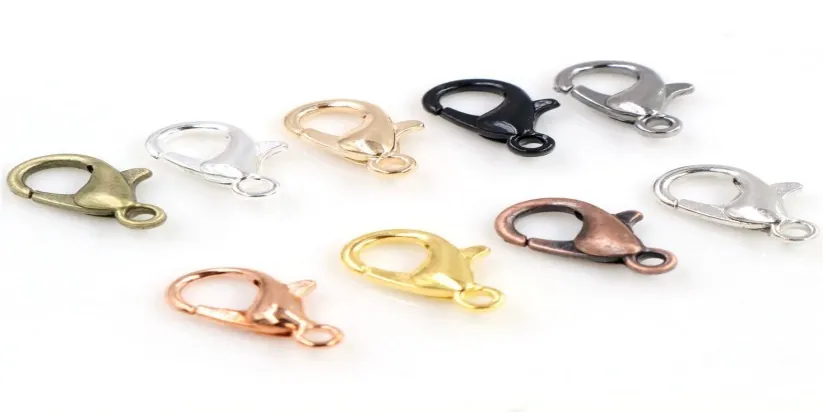
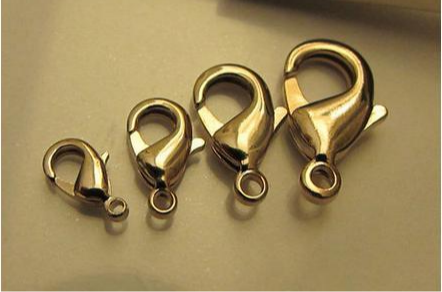
The lobster claw clasp, named for its resemblance to a lobster’s pincer, features an elongated, pear- or oval-shaped body with a hinged lever on one side. Press the lever, the arm retracts, and the clasp opens wide enough to hook onto a jump ring. Release it, and a strong internal spring snaps it shut with a satisfying click.
Advantages
Lobster clasps are favored for their durability and ease of use, making them popular for chunky bracelets, heavier necklaces, and pieces worn daily. The clasp’s secure hold and relatively larger size make it accessible even for those with limited dexterity. Wearers can open and close them with one hand. For bracelets especially, this is a significant advantage.
Limitations
The body of a lobster clasp carries more metal weight than a similarly sized spring ring, which makes them generally more expensive. But that extra material also unlocks greater design variety: lobster clasps are available in traditional oval, pear, heart, and swivel styles, giving brands more room to match the clasp to the aesthetic of a line.
One trade-off worth noting is that the added weight can cause a lobster clasp to migrate toward the front of a necklace over time. This is a minor but real wearability consideration for certain chain lengths and weights.
Spring Ring Clasp vs Lobster Clasp
| Feature | Spring Ring Clasp | Lobster Clasp |
| Mechanism | Circular tube with spring-loaded lever | Elongated body with hinged lever |
| Cost | Lower | Moderate |
| Ease of Use | Requires two-handed manipulation; fiddly | Easier, possible one-handed operation |
| Security | Good for lightweight pieces | Stronger hold; better for daily wear |
| Best For | Delicate chains, fine jewelry, fashion pieces | Heavy necklaces, bracelets, premium lines |
| Aesthetic Profile | Discreet, low-profile | More visible; can be a design feature |
What to Consider When Choosing the Right Clasp
1. Chain Weight and Piece Construction
This is the most straightforward filter. Lightweight, fine chains (think snake chains, rolo chains under 1.5mm, or delicate pendants) pair naturally with spring ring clasps. The clasp stays proportional and does not overwhelm the design. For heavier chains, charm bracelets, or multi-strand pieces, a lobster claw clasp provides enhanced structural security.
2. Price Tier and Brand Positioning
Spring ring clasps signal economy, and that is not always a negative. For high-volume fashion lines where unit cost matters, they are the sensible choice. For mid-tier or premium lines, especially those marketed as everyday essentials or gifting pieces, lobster clasps are often the more suitable choice.
3. Target Demographic
This factor is underappreciated in product development. People with arthritis or hand problems often ask jewelers to swap their spring rings for lobster clasps because they simply cannot manage the small lever anymore. If a brand’s core customer is over 40, or if a line is positioned around accessibility and everyday wearability, the lobster claw is the responsible default.
4. Aesthetic Intent
A spring ring clasp is meant to vanish. A lobster clasp, particularly in larger sizes or decorative finishes, can become part of the design conversation. Some brands use an oversized swivel lobster clasp as a deliberate design accent. Others want zero hardware distraction. Know which approach a product requires before specifying a clasp at the sourcing stage.
Why Star Harvest Is the Right OEM Partner for Jewelry Accessories
The clasp decision only delivers value if the component itself is manufactured to spec. A spring ring with a weak internal spring, or a lobster clasp whose lever sticks or snaps off, creates customer complaints that no return policy fully resolves.
As a jewelry manufacturer with over 20 years of OEM experience, we at Star Harvest supply high-quality spring ring and lobster claw clasps as part of a comprehensive accessories offering, alongside chains, link rings, and other findings.
For example, our precision-stamped copper alloy clasps, manufactured to tolerances as fine as 0.05 mm, can withstand tensile forces of up to 20 kg without failure. EU-compliant nickel release levels (<0.2 μg/cm²) ensure skin safety while maintaining consistent color between the closure and the main jewelry piece.
For brands building jewelry lines at scale, Star Harvest’s vertically integrated manufacturing, from CAD and mold design to plating, assembly, and packaging, means clasp decisions can be made early in the design process and executed precisely through mass production. It eliminates gaps between design intent and final output.
Conclusion
The spring ring clasp vs lobster clasp decision comes down to a few clear variables: the weight of the piece, the price point of the line, and who will be wearing it. Spring rings work best for lightweight, price-sensitive, or aesthetically minimal designs. Lobster claws are the better default for anything heavier, premium, or worn by customers who value ease above all else.
Both options are straightforward, but only if a jewelry manufacturer executes them with care. Contact Star Harvest to discuss clasp specifications, custom accessory production, and full OEM jewelry manufacturing for your next collection.

