
Pick up almost any bridal ring or luxury fashion piece that seems to glow from every angle, and there’s a good chance pavé setting is the reason. Rows of tiny stones sit so tightly together that the metal beneath them practically disappears. What the eye sees is an uninterrupted surface of light and sparkle. It’s one of the most visually striking techniques in jewelry, and for brands, it’s a decision that carries real strategic weight.
What Is Pavé Setting?
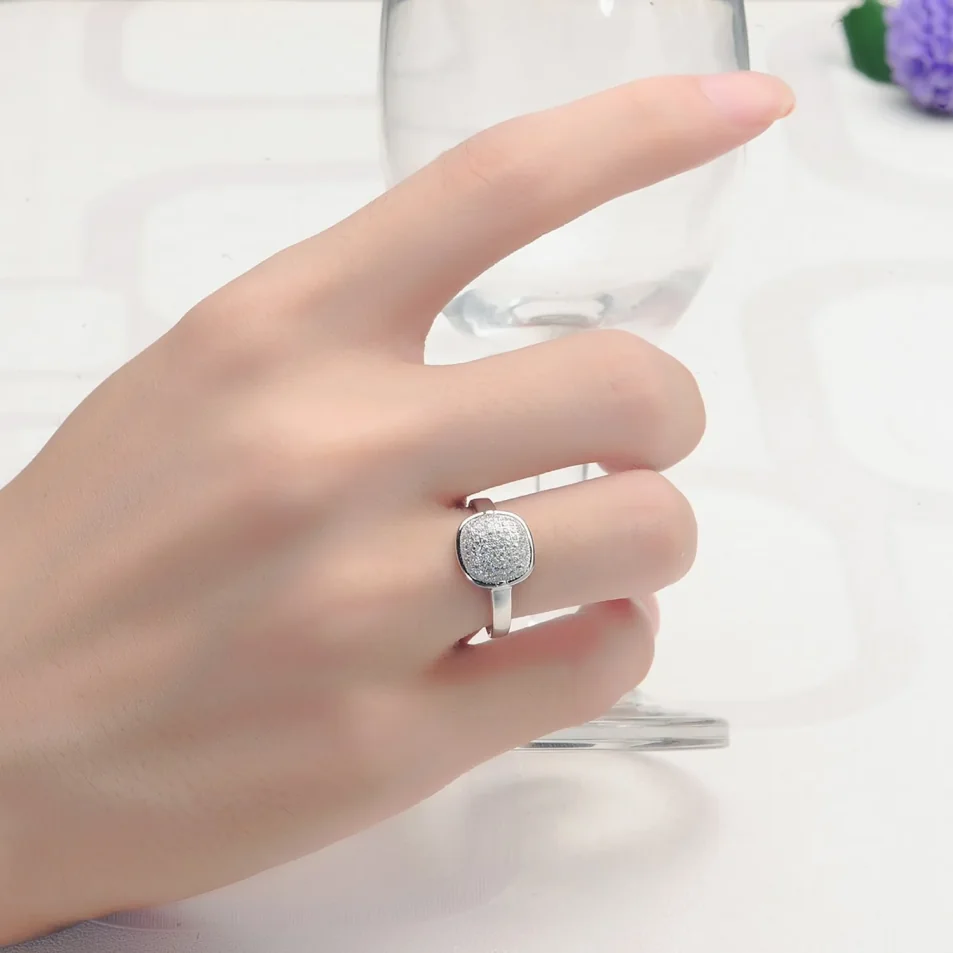
The word “pavé” comes from French and means “paved”, which is a fitting description. The technique places small stones, typically diamonds or cubic zirconia, into tiny drilled holes across the metal surface. Each stone is then locked in place with miniature beads or prongs raised directly from the metal itself, leaving almost no visible gap between stones. The result is a surface that looks completely covered in gemstones, with the structural metal reduced to a near-invisible framework beneath.
Pavé set jewelry comes in several distinct variations, each suited to different product tiers and design goals.
Micro Pavé
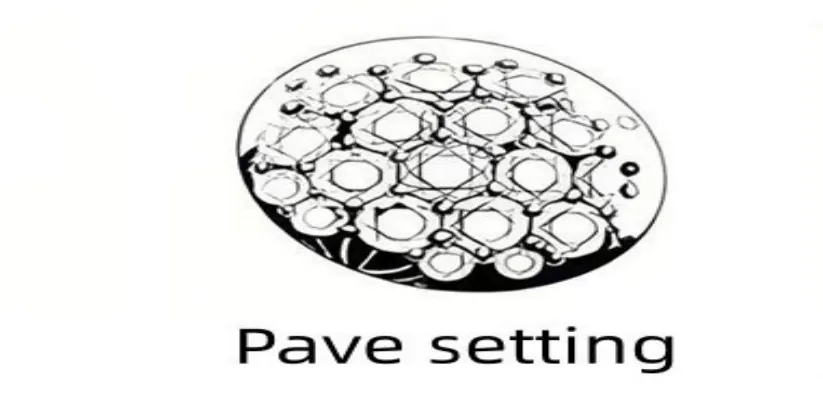
Micro pavé uses stones typically no larger than 1.2 mm in diameter. Every seat must be perfectly prepared to hold a stone. The payoff is a surface that appears seamlessly encrusted with sparkle, making micro pavé jewelry a natural fit for high-end fashion and fine jewelry lines where refinement is the whole point.
U-Cut Pavé
U-cut pavé, sometimes called scalloped pavé, is distinguished by the U-shaped grooves cut into the metal beneath each stone. These cutouts reduce the visible metal between stones and allow more light to enter from below, increasing the diamond-to-metal ratio and maximizing brilliance. When a piece is viewed from the side, a consistent wavy or scalloped pattern becomes visible along the band. This is an aesthetic detail that adds sophistication without extra stone cost.
Bead Pavé
Bead pavé is the traditional form of the technique. A small hole is drilled for each stone, and tiny beads of metal are pushed up and shaped around it to act as prongs. Most modern bead pavé uses four equally spaced beads per stone, which provides better retention than older two-bead configurations. This style is common across mid-range and accessible luxury lines because it balances visual impact with production reliability.
The Advantages of Pavé Setting
1. Enhanced Sparkle and Brilliance
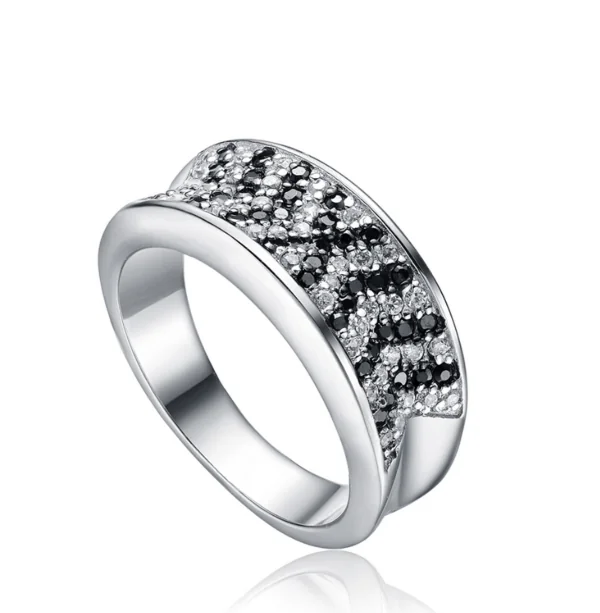
The close-set arrangement of stones means that light reflects off multiple facets simultaneously from virtually every angle. Unlike a solitaire, where a single stone captures light in isolation, a pavé surface creates a continuous cascade of brilliance. This is one of the main reasons pavé set jewelry photographs so well and performs strongly in retail environments.
2. Illusion of Larger Surface Area
Because the metal disappears behind the stones, even a narrow band or small pendant can look far more substantial than its actual dimensions. Brands can use this to their advantage: a smaller, lighter piece reads as a premium product at first glance, which supports higher price points without a proportional increase in material cost.
3. Elegant and Delicate Aesthetic
Pavé has a refined, polished quality that works across categories: bridal, everyday fine jewelry, and fashion-forward statement pieces all benefit from it. The setting adds texture and complexity to a design without the visual weight of larger stones or bold metalwork, making it versatile enough for multiple collections.
The Limitations of Pavé Setting
1. Risk of Losing Stones
This is the most commonly cited concern with pavé, and it is a real one. The tiny prongs or beads that hold each stone can be delicate. A knock, a catch on fabric, or general wear over time can shift or break a bead, releasing a stone. Brands selling into everyday wear categories need to weigh this carefully.
2. Difficult to Resize
Altering a pavé piece, particularly a ring, requires a skilled artisan who can remove, store, and re-set stones across the resized section. Not every repair facility can handle this properly, and the risk of losing or mismatching stones during the process is genuine. Brands offering custom sizing options should factor this into their after-sales model.
3. High Maintenance and Cleaning
The tiny gaps between stones can trap lotion, soap residue, and debris. Over time, this buildup dulls the very sparkle that makes pavé appealing. Customers need to clean their pavé pieces regularly with a soft brush, and a professional inspection every six months is advisable to check for loose stones. This maintenance expectation should be communicated clearly at the point of sale.
When Should Brands Integrate Pavé Setting?
The honest answer is: not for everything. Pavé works beautifully in the right context, but it is not a universal solution for every product line.
It is the right call for brands targeting mid-to-luxury tier customers, bridal collections, or fashion-forward consumers who prioritize aesthetics and are willing to invest in care and quality. Engagement rings, anniversary bands, statement earrings, and occasion necklaces are natural homes for pavé. It elevates a piece and signals craftsmanship.
It is the wrong call for everyday basics, entry-level fast fashion pieces, or any product designed for high-impact, low-maintenance daily wear. In those contexts, the durability trade-off creates more problems than the visual benefit solves.
For brands ready to integrate pavé, manufacturer capability is the critical variable. The precision required is not something every factory can deliver at scale. Before committing, brands should verify that a manufacturer uses laser-guided or CNC-assisted drilling for even stone spacing, has measurable quality standards for stone retention, and can demonstrate consistent output across production runs, not just samples.
Why Star Harvest Is the Right Manufacturing Partner for Pavé Jewelry
Star Harvest is a professional OEM jewelry manufacturer with over 20 years of experience in brass and stainless steel jewelry for global brands. Our pavé setting capability is built around a laser-guided drilling system that ensures even spacing of each 0.8–1.5 mm stone, with a stainless steel base featuring pre-cut anti-slip grooves that improve retention from the ground up.
Production capacity reaches up to 1,500 stones per hour, a scale that supports both trial runs and full mass production without quality compromise.
Stone selection is backed by a global sourcing network with access to over 2,000 gemstones, including natural stones and cubic zirconia across multiple quality grades. Each batch is optically screened to ensure color difference stays below 0.5 levels, and the proprietary SH-XQ firmness test puts every setting through 300 tensile tests before approval.
Our factory holds RJC, SGS, and ISO certifications, and carries full compliance documentation for European and American markets.
For brands that need pavé done right, i.e., consistently, at scale, and to a verified standard, Star Harvest has the infrastructure and the track record to deliver. Contact Star Harvest to discuss your next collection.
Final Thoughts
Pavé setting is one of the most powerful tools available to jewelry brands. When the right product meets the right manufacturer, the result is a piece that sells on sight. The key is knowing where it fits — and where it doesn’t. Choose it with purpose, vet your production partner carefully, and pavé can become a defining signature of your brand’s aesthetic.

