
Stainless steel jewelry has become a trend in contemporary fashion lines because it delivers three core benefits: moderate price, exceptional durability, and a clean, modern look. It offers budget-friendly luxury that withstands daily wear, resisting scratches, tarnish, and corrosion.
To satisfy the enduring demand for gold-tone pieces, stainless steel can be electroplated with a thin layer of genuine gold (usually 18 K or 24 K). The process is straightforward: after ultrasonic cleaning, the jewelry is immersed in an electrolytic bath containing gold ions; a direct current is applied so that the positively charged gold ions migrate to the negatively charged steel surface, forming a uniform, adherent coating. A final protective clear PVD (Physical Vapor Deposition) layer is often added to lock in the gold color and extend wear life.
As you expand your collections to include this metal, a critical question arises regarding inventory longevity and customer satisfaction: stainless steel jewelry does it tarnish?
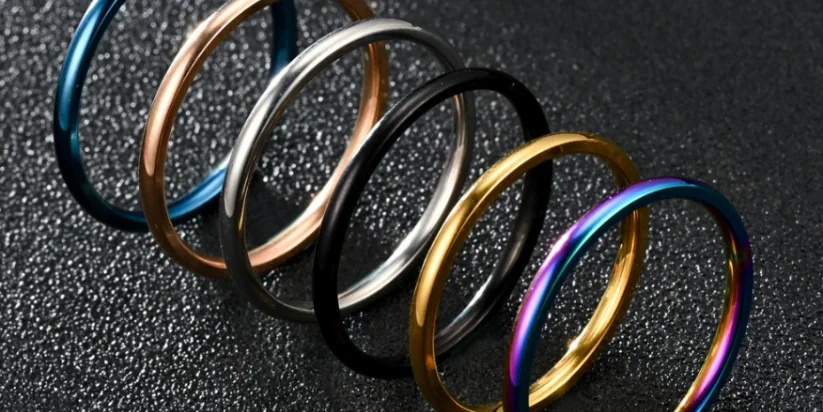
Does Stainless Steel Jewelry Tarnish?
To answer the primary question directly: In its bare, unplated state, stainless steel jewelry does not tarnish in the way silver or copper does.
The resistance to tarnishing is rooted in its chemical composition. Stainless steel is an alloy of iron that contains a minimum of 10.5% chromium. When this chromium interacts with oxygen in the air or water, it forms a microscopic, invisible layer of chromium oxide on the surface. This is known as a “passive film.” Unlike the oxidation on iron (rust), which flakes off and eats away at the metal, this chromium oxide layer is stable and self-healing. If the surface is scratched, the chromium reacts with oxygen to repair the barrier immediately.
Because of this passive film, the metal is inherently resistant to the sulfur in the air that turns sterling silver black. It is also highly resistant to water, sweat, and humidity, making it the ideal base material for “waterproof” jewelry lines marketed to active consumers.
When “Dullness” Mimics Tarnish
While the alloy itself does not tarnish, brand owners must educate their quality control teams and customers about “dullness.” Over time, a buildup of natural body oils, cosmetics, lotions, and environmental dust can coat the surface of the jewelry, making it appear less lustrous. This is not a chemical degradation of the metal but a surface residue. In almost all cases, this can be resolved through simple cleaning with mild soap and water, restoring the original shine without professional polishing.
Exceptions: Chemical Damage
While highly durable, stainless steel is not invincible. Exposure to harsh chemicals—specifically strong acids, alkalis, or high concentrations of chlorine—can compromise the chromium oxide layer. For brands, this means advising customers to avoid exposing jewelry to industrial cleaning agents or excessive chlorine in swimming pools, although occasional exposure is generally tolerated far better than by other metals.
The Complexity of Plating: Does Gold–Plated Stainless Steel Jewelry Tarnish?
The question becomes more nuanced when discussing gold-tone collections. Product developers often ask: does gold-plated stainless steel jewelry tarnish, or does stainless steel gold jewelry tarnish over time?
Technically, the underlying stainless steel remains tarnish-free, but the gold layer on top is subject to wear. However, there is a distinct difference between the “tarnish” seen in silver (a chemical reaction creating a black layer) and the “fading” seen in plated stainless steel.
- Fading vs. Tarnishing:Gold plating on stainless steel does not typically turn green or black. Instead, over extended periods of heavy friction or chemical exposure, the gold layer may thin out, revealing the silver-grey steel beneath.
- The Rose Gold Factor: Rose gold plating, due to its copper content,used to achieve the pinkish hue, is slightly more susceptible to color shifts than standard yellow gold plating.
- Longevity Factors:The lifespan of the gold finish is heavily dictated by the plating method used. Standard “water plating” or flash plating may last only a few months before showing signs of wear. This leads us to the industry standard for high-quality brands: PVD.
How to Make Stainless Steel Jewelry More Durable?
To ensure your products withstand daily wear and maintain their premium look, relying solely on the base metal’s properties is insufficient. You must implement strict sourcing standards.
1. Optimization of Surface Treatments
For brands asking does gold stainless steel jewelry tarnishes, the answer largely depends on surface treatment.
Techniques like electroplating (e.g., with platinum or black PVD) add a hard, protective layer that significantly improves resistance to scratches and tarnish. Brushing creates a matte finish that better conceals minor abrasions, while high-quality polishing not only enhances the luster but also smooths the surface, making it less prone to holding scratches.
2. Material Grade Specification
Durability is compromised if clasps, jump rings, or chains are weak. Components made from superior materials (like 316L stainless steel or solid gold) and robust construction (e.g., box clasps instead of simple spring rings) ensure that the entire piece, not just the main part, can withstand daily wear and tear.
3. Partnering with Reputable Manufacturers
The durability of the final product is inextricably linked to the manufacturing process. Poor surface preparation, such as inadequate polishing before plating, can lead to premature peeling or uneven coloring. Collaborating with an experienced manufacturer ensures that the substrate is perfectly prepped, maximizing the adhesion of the gold layer.
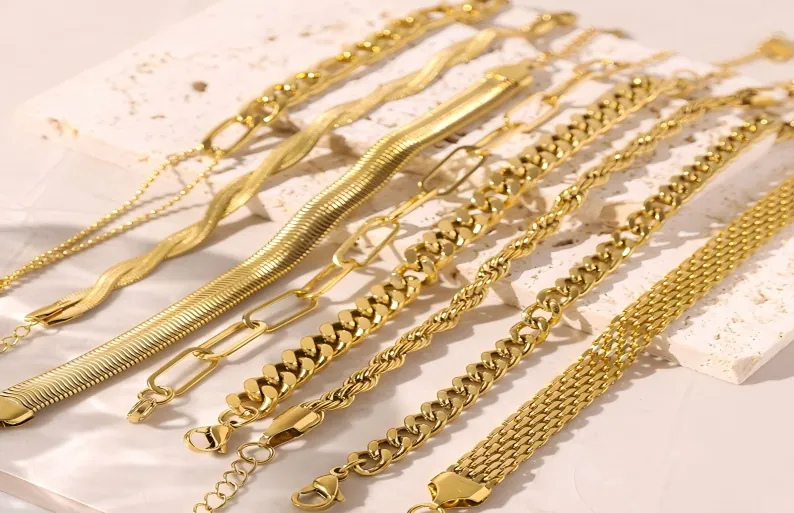
Star Harvest: Your Strategic Partner for High-Retention Jewelry
For medium and large-scale jewelry brands, the supply chain is the backbone of growth. Selecting a manufacturing partner who understands the nuance between “industry standard” and “premium quality” is critical. This is where Star Harvest excels.
As a premier manufacturer specializing in brass and stainless steel solutions, Star Harvest understands the rigorous demands of the global market. With years of experience in the jewelry industry, we do not just supply products; we provide manufacturing solutions that protect your brand equity.
Star Harvest utilizes advanced OEM/ODM capabilities to deliver jewelry that meets international standards for durability and aesthetics. Our commitment to precise craftsmanship extends from the initial 3D design to the final quality control check. By leveraging our state-of-the-art production facilities in Dongguan, you gain access to manufacturing processes that prioritize longevity, ensuring your customers enjoy the lasting brilliance of their jewelry.
Elevate your brand’s reputation with products built to last.
Partner with Star Harvest for your next collection and experience the difference that professional craftsmanship makes in the competitive jewelry landscape.

