
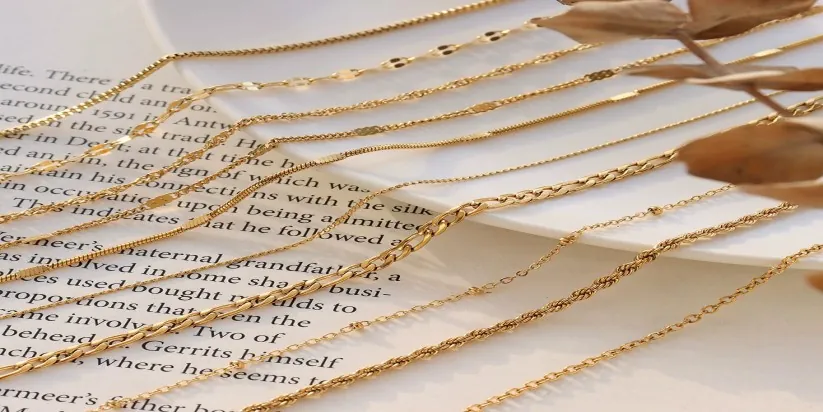
For rapidly growing e-commerce brands and established jewelry retailers, balancing aesthetic luxury with commercial viability is a constant challenge. Gold remains the standard for elegance, but solid gold inventory can be prohibitively expensive and risky to scale. This is where high-quality electroplated gold jewelry serves as a strategic cornerstone.
By utilizing advanced electroplating technologies, brands can offer the lustrous finish of 18K or 14K gold at a fraction of the cost, allowing for wider profit margins and more agile design iterations.
But not all plating is created equal. How is electroplated gold jewelry crafted? What are its advantages? Understanding the engineering behind electroplating gold jewelry is essential to ensure that they are durable, compliant, and market-ready products. Read on to learn more.
What is Electroplated Gold Jewelry?
At its core, electroplated gold jewelry consists of a base metal core, typically sterling brass or stainless steel, coated with a thin, molecularly bonded layer of gold. Unlike “gold-filled” or mechanical bonding, electroplating is an electrochemical process.
The science behind it is a redox reaction. The jewelry piece acts as the cathode (negative electrode) and is submerged in an electrolyte solution containing dissolved gold ions. When a precise direct current (DC) is applied, the gold ions are attracted to the jewelry’s surface, where they reduce and deposit to form a uniform, metallic coating. This process allows for precise control over the thickness and shade of the gold, making it a preferred method for modern jewelry manufacturing.
How is Electroplated Gold Jewelry Crafted? The Manufacturing Process
For premium gold electroplated jewelry, the manufacturing process is far more rigorous than a simple “dip.” It needs to follow a strict multi-stage protocol to ensure adhesion, brightness, and longevity.
1. The Electroplating Process
Step 1: Surface Treatment & Preparation
The longevity of the plating is determined before the item even enters the gold tank. The base metal must be meticulously polished to a mirror finish. Any roughness will be magnified by the plating. Following polishing, the pieces undergo rigorous cleaning:
- Ultrasonic Degreasing:Removes polishing wax and oils.
- Electro-cleaning:An electrochemical cleaner removes microscopic impurities.
- Acid Activation:A mild acid bath removes surface oxides to ensure the metal surface is active and ready to bond.
Step 2: Base Layer Application
Directly plating gold onto base metals like brass or stainless steel can lead to “migration,” where copper atoms diffuse into the gold layer over time, causing tarnishing or color spots. To prevent this, a barrier layer is applied.
Step 3: Electroplating
The jewelry is submerged in the gold plating solution. The voltage, temperature, and immersion time are computer-controlled to achieve the exact target specifications.
- Flash Plating:A quick dip for color.
- Micron Plating:Sustained plating to build real thickness for durability.
Step 4: Post-Treatment
Once plated, the jewelry undergoes multiple rinses in deionized water to stop chemical reactions. Finally, a transparent anti-tarnish coating (E-coating) may be applied to seal the microscopic pores of the plating, significantly extending the shelf life and wearability of the electroplated jewelry.
2. Key Metrics
To ensure quality control, brands must define two key specifications:
Gold Plating Thickness: This is the primary indicator of quality.
- 1–0.3 μm:Cost-effective, suitable for fast-fashion or low-touch items (earrings).
- 5–1.0 μm:The standard for quality fashion jewelry. Offers good wear resistance for necklaces and pendants.
- 5–2.0 μm:High-end quality. Recommended for rings and bracelets that endure high friction.
- 2.0+ μm: The premium tier, often used on Sterling Silver bases for luxury positioning.
Karat:
- 18K:The most popular choice for the European and Spanish markets, offering a rich, warm yellow hue.
- 14K:A subtler, slightly paler yellow, popular in the US market.
Hamilton Gold or Rose Gold variations are achieved by adjusting the copper content in the plating bath.
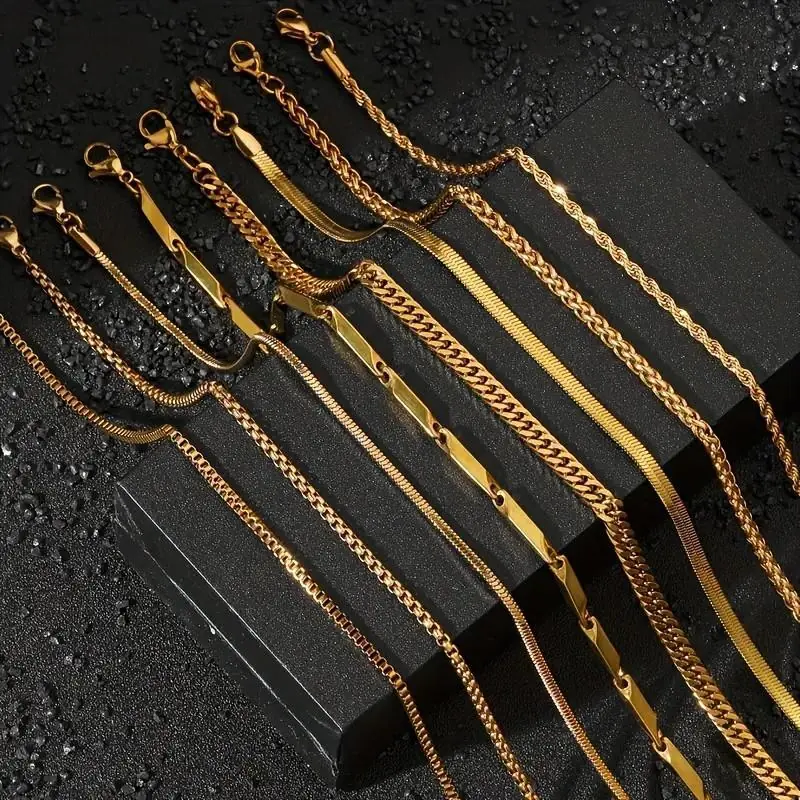
Why Choose Electroplated Gold Jewelry for Your Collection?
For medium to large-scale brands, electroplating gold jewelry offers specific strategic advantages over solid gold or gold-filled alternatives.
1. Optimized Production Costs
The most obvious benefit is the reduction in Cost of Goods Sold (COGS). By using Brass or stainless steel as the core, brands can price items competitively while maintaining the perceived value of gold. This frees up capital for marketing and inventory expansion.
2. Flexible Design
Electroplating works on complex geometries that might be difficult or wasteful to cast in solid gold. Whether it is intricate filigree or chunky, modern statement pieces, the electroplating process ensures every crevice is evenly coated.
3. Rich Color Variety
The electroplating bath allows for precise color customization. Brands can request specific “Hamilton” tones to match vintage aesthetics, or specific Rose Gold hues (e.g., 4N vs 5N) to align with brand identity—consistency that is harder to achieve with solid alloys across different batches.
4. Lightweight and Comfortable Wear
Solid gold is dense and heavy. Large statement earrings or chunky chains made of solid gold can be uncomfortable for daily wear. Electroplated jewelry using a brass or stainless steel core remains lightweight, improving customer satisfaction for bold designs.
5. Enhanced Durability and Hardness
Pure gold is soft. By utilizing a specific plating formulation (often with minute amounts of cobalt or nickel for hardness), the outer layer of gold electroplated jewelry can be harder and more scratch-resistant than solid 24K gold. Coupled with E-coating, these pieces can withstand daily wear significantly better than untreated metals.
How to Customize Electroplated Gold Jewelry?
In the competitive jewelry landscape, consistency is currency. Fluctuations in plating color or thickness can damage a brand’s reputation and increase return rates. Therefore, partnering with an experienced OEM manufacturer is critical.
Star Harvest specializes in high-quality OEM/ODM jewelry manufacturing for global brands. We understand the nuances of the electroplated gold jewelry supply chain.
- Certified Quality:We provide precise thickness reporting to ensure you get exactly the micron count you pay for.
- Regulatory Compliance:Our plating processes are designed to meet strict international standards, ensuring smooth entry into the Spanish and broader European markets.
- Custom Solutions:From 18K Yellow Gold to specialized Rose Gold tones, we tailor the plating finish to your brand’s specific palette.
Are you ready to elevate your product line with reliable, premium manufacturing?
Contact Star Harvest Today to discuss your custom jewelry specifications and request a quote for your next collection.

