Your jewelry business name is the first promise you make to your customers — before they see a single product, touch a single piece, or read a single review. It shapes expectations, signals positioning, and determines whether someone clicks through or scrolls past.
At Star Harvest, we’ve partnered with over 200 jewelry brands since 2005, providing OEM and ODM manufacturing for businesses ranging from solo founders to large-scale retail chains. In that time, we’ve watched brand names either open doors or quietly close them — and we’ve learned exactly what separates the names that endure from those that don’t.
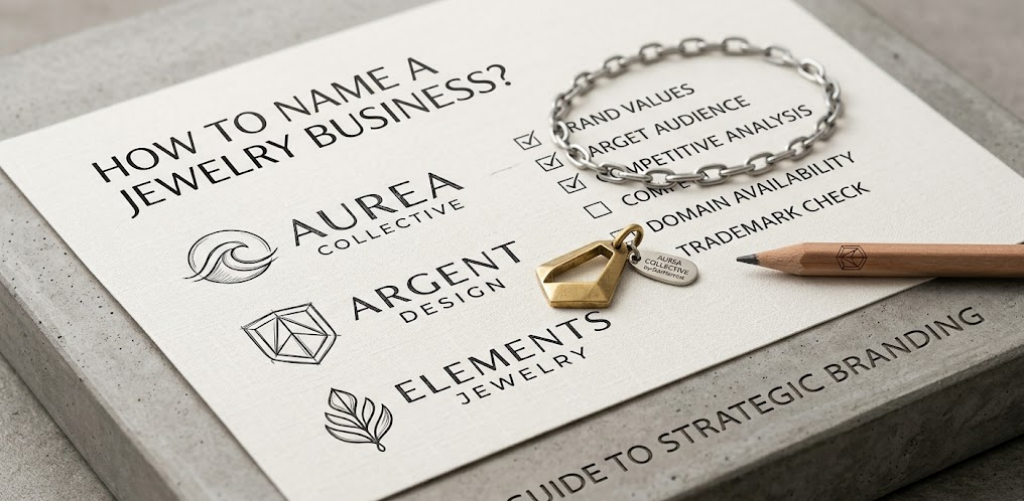
This guide shares that experience. Whether you’re launching your first jewelry line or rebranding an existing one, we’ll walk you through how to name a jewelry business with clarity, strategy, and long-term growth in mind.
Why Your Jewelry Business Name Is a Strategic Asset
Most entrepreneurs treat naming as a creative exercise. Experienced brand builders treat it as a business decision.
Your name is the anchor of every marketing dollar you spend. It determines your SEO baseline, shapes your social media discoverability, and sets the emotional register your audience uses to evaluate you — even before any purchase. In the jewelry industry, where trust and aesthetic resonance are especially critical, a misaligned name creates friction that’s expensive to overcome later.
We’ve seen this play out repeatedly in our factory partnerships. Brands that arrive with a clear, well-considered name tend to make faster decisions across the board — from material selection to packaging design. Their name is a compass. Brands that haven’t settled their identity yet often struggle to define the product itself.
A strong jewelry business name does five things simultaneously:
- Signals your market tier (fine, demi-fine, fashion, custom)
- Attracts your target customer while filtering out mismatches
- Travels well across channels — spoken, typed, hashtagged, printed on a tag
- Scales with your business as you expand categories or markets
- Survives time — it won’t feel dated in five years
The investment you make in naming before launch pays dividends across the entire life of your brand.
The Anatomy of a High-Performing Jewelry Brand Name
Before brainstorming begins, it helps to understand what makes jewelry brand names work. From observing hundreds of brand launches and rebrands across our manufacturing partnerships, here are the qualities that consistently correlate with long-term success.
Immediate Clarity, Even Without Context
A great name communicates something about the brand on first encounter — even to someone who’s never heard of it. That “something” doesn’t have to be literal. It can be emotional (Aurate, Mejuri), aesthetic (Catbird, Gorjana), or aspirational (Monica Vinader, Missoma). What it cannot be is confusing.
If someone needs a lengthy explanation to understand what your name means or why you chose it, it’s working against you.
Pronunciation Confidence
In an era where word-of-mouth lives on voice notes, TikTok videos, and influencer mentions, your name needs to be sayable by anyone, anywhere. If customers second-guess how to pronounce it, they’ll hesitate to recommend it — or worse, they’ll mispronounce it in ways that dilute recognition.
Test your name out loud with people who’ve never seen it written. If they nail it first try, you’ve passed one of the most practical tests in naming.
One to Three Words, With Weight
Brevity isn’t just a marketing preference — it’s functional. Shorter names fit better on packaging, display more legibly as jewelry tags, and are easier to recall during a search.
That said, length is less important than weight. A two-word name with no memorability is weaker than a single distinctive word that sticks. Aim for economy and impact.
Built for the Digital Environment
Your name will live on Instagram handles, domain registrations, Google searches, and email addresses. Before falling in love with any name, check that it:
- Has a clean .com domain available (or an acceptable alternative)
- Isn’t dominated by an unrelated brand in Google results
- Works as a social handle without excessive underscores or numbers
- Looks good in lowercase, which is how most URLs and handles appear
Room to Grow
Hyper-specific names can become constraints. “Silver Ring Studio” works when you only make silver rings — but what happens when you expand into brass jewelry, stainless steel collections, or custom wholesale? Names tied too tightly to a single material, technique, or style can limit your ability to evolve.
Build in flexibility. The name should fit your vision at five years, not just your first product.
Step One: Define Your Brand Before You Name It
This is the step most entrepreneurs skip — and it’s the reason so many early names get abandoned. A name is a container; before you design the container, you need to know what it’s holding.
Clarify Your Jewelry Style and Market Position
The jewelry industry spans an enormous range of aesthetics and price tiers. Your name should feel native to your segment.
Fine and Luxury Jewelry (solid gold, platinum, precious stones, retail price $500+) Names in this tier tend to be founder-driven, European in cadence, or rooted in classical reference. Think: timeless, restrained, and weighty. Avoid anything playful or trendy — it undercuts perceived value. Direction: Founder surname, Latin/French/Italian origins, gemstone or metal references with gravitas.
Demi-Fine and Contemporary Jewelry ($80–$500 retail, gold-fill, vermeil, premium stainless steel) This is the fastest-growing segment. Names here blend accessibility with aspiration. They’re modern and editorial without being cold. This is where much of the B2B growth we support at Star Harvest lives — brands working with gold-plated brass or PVD-coated stainless steel to deliver luxury aesthetics at attainable prices. Direction: Invented words, nature references with sophistication, minimalist proper nouns.
Fashion and Trend-Driven Jewelry (under $80 retail, fast cycle, bold aesthetics) These brands need names with energy and cultural relevance. Playfulness, edge, and attitude work here in ways they don’t at higher price points. Direction: Compound words, slang-adjacent terms, visual metaphors, bold contrast.
Custom and Artisan Jewelry (handmade or small-batch, personalization-focused) Customers buying custom jewelry are buying the maker as much as the piece. Personal names, workshop terminology, and craft-language resonate deeply. Direction: Founder name, studio/workshop framing, regional identity, material specificity.
Know Who You’re Naming For
Your name is not for you — it’s for your customer. And that customer is a very specific person with specific aesthetic preferences, cultural references, and emotional vocabulary.
A name that resonates with a 24-year-old streetwear enthusiast will feel jarring to a 45-year-old looking for an anniversary gift. A name targeting the bridal market should carry different weight than one targeting Gen Z on TikTok.
Push yourself to be specific: not “women aged 25–45” but “career-focused women who want everyday jewelry that reads expensive without announcing a price tag.” The more precisely you define this person, the more clearly you can evaluate whether a name speaks to them.
Articulate Your Brand Values in Three Words
Before naming, we ask our brand partners to complete a simple exercise: describe your brand in exactly three words. Not sentences — three individual words.
Those three words become a filter for every naming decision.
If your three words are minimal, elevated, everyday — a name like “Glitter Babe Studio” fails the filter. If your words are bold, unapologetic, expressive — a name like “Lumière Fine Jewelry” feels off-brand.
This exercise also helps during early product development conversations with us. When a brand can articulate its identity in three precise words, every design decision becomes faster and more consistent — from surface finish selection to clasp style to stone setting approach.
Step Two: Brainstorm Without Judgment
With your brand identity anchored, open the creative process. The goal in this phase is volume — generate as many candidates as possible before evaluating any of them.
Six Productive Brainstorming Directions
- Mine Your Brand ValuesTake your three brand words and build outward. If one of your words is “precision,” explore synonyms, antonyms, and associated imagery: accuracy, calibration, edge, alignment, exactitude, grade. From “grade” you might arrive at “Grade Studio” or “First Grade Jewelry.” Unexpected paths surface distinctive names.
- Explore Material MetaphorsJewelry materials carry rich connotative vocabulary. Gold suggests warmth, permanence, and value. Steel suggests precision, resilience, and modernity. Silver evokes clarity and quiet elegance. Gemstones each carry centuries of symbolic meaning. Mining this vocabulary often yields names with built-in resonance.
- Borrow From Adjacent IndustriesSome of the most memorable jewelry brand names take language from unrelated domains — architecture, cartography, astronomy, botany — and apply it to adornment. The displacement creates intrigue without confusion. “Meridian Jewelry,” “Canopy Gold,” or “Stratum Studio” feel distinctive precisely because they’re unexpected.
- Try Founder-Based ConstructionYour own name is always available and carries authenticity. But beyond direct use, consider variations: middle name, mother’s maiden name, a meaningful place from your background, or a combination of initials. These create personal connection without over-personalizing.
- Look to Other LanguagesA word that’s common in Spanish, Italian, Japanese, or French may be distinctive and evocative in English-language markets. Verify pronunciation ease, and always — always — check for unintended meanings across your target markets before proceeding.
- Invent Compound Words or PortmanteausCombining two words (lumière + arc = Lumarc; gem + craft = Gremcraft) often surfaces something entirely ownable. This approach works especially well for the demi-fine and fashion segments.
Jewelry Business Name Ideas by Brand Positioning
The following name ideas are grouped by brand archetype. Use them as inspiration to spark your own brainstorm — not as final candidates. The best name for your brand will emerge from your specific identity work, not a generic list.
Names for Fine and Luxury Jewelry Brands
- Havre & Co.
- Calloway Fine
- Aldren Atelier
- Solenne
- Parevé Jewels
- Thornfield Fine
- Maison Luce
- Elsmere & Sons
- Varro Fine Jewelry
- Pelham House
- Serault
- Ardrenne Jewels
- The Bexley Collection
- Rue Dorée
- Guildhall Fine
- Lennox & Gray
- Marcavaux
- Coldwater Fine Jewelry
- Aldgate Gold
- Crestmore Atelier
Names for Demi-Fine and Contemporary Brands
- Forma Collective
- Arcline Studio
- Veld Jewelry
- Brynmore
- Studio Noor
- Pale Gold
- Tidal Atelier
- Orion Thread
- Lorne Studio
- Cairn Jewelry
- Sable & Stone
- Altfield
- Mira Loop
- Verso Gold
- Layline Studio
- The Meridian Edit
- North Croft
- Current Studio
- Ashford & Lane
- Solstice Collective
Names for Fashion and Trend-Driven Brands
- Drop Zone Jewelry
- Static Gold
- Loud Metal
- Chain Theory
- Hard Glow
- Flashwire
- Goldburn Studio
- Spike & Silk
- Neon Clasp
- Glassbone
- Melt & Mold
- Wildcast Jewelry
- Edgecase Studio
- Burnside Gold
- Voltage Jewels
- The Chain Agenda
- Chaos Gold Co.
- Shatterglass
- Heatwave Jewelry
- Blunt Gem
Names for Custom and Artisan Brands
- The Bench Studio
- Handrawn Jewels
- Made at Millbrook
- Thornwork Studio
- The Wax Room
- Cast & Keep
- Solder & Story
- Ingot Studio
- Forged & Found
- The Setting Room
- Mill River Jewelry
- Benchside
- Hammered Hours
- Poured in Gold
- The Wire Bench
- Firstfire Studio
- Small Batch Gold
- Crafted by [Name]
- Kindling Jewelry
- The Repair Shop (for restoration-focused brands)
Names for Online-First and D2C Jewelry Brands
- Ship in Gold
- Cartlink Jewelry
- Open Loop Studio
- Goldenfile
- DirectKarat
- Lineweight Jewelry
- Onepiece Studio
- Goldroute
- Frame & Finish
- Dispatch Fine
- Clear Weight
- Plated & Posted
- Goldthread Direct
- Stackwise
- Wearpath Studio
- GoldReach
- Directcast
- Postmark Jewelry
- The Drop Studio
- Open Chain Co.
Step Three: Test Before You Commit
A shortlist of three to five names is the right point to begin testing. Don’t test too early (before you’ve refined the list) or too late (after you’ve invested in assets and identity).
The Feedback Loop
Gather structured input, not just reactions. Unstructured feedback (“I like it” / “I don’t know”) isn’t actionable. Instead, ask specific questions:
- What kind of store do you imagine when you hear this name?
- What price range would you expect their jewelry to be?
- How would you describe this brand to a friend?
- What does this name make you feel?
Misalignment between your intent and their interpretation is valuable data. If you’re building a premium stainless steel jewelry line and testers describe your name as “something you’d find at a craft fair,” there’s a positioning problem to solve before launch.
Diversify your testers. Friends and family offer low-friction feedback but tend toward validation. Include people who match your target customer profile, and if possible, run a simple social media poll with two or three finalists.
Visual Context Testing
Names live inside visual systems. A name that sounds elegant in conversation may look clumsy on a hang tag, or feel misaligned next to a modern logo treatment.
Before finalizing, visualize each name in context:
- As a wordmark (the name in typography, without a logo symbol)
- On a mock product tag or card
- In an Instagram username format (@brandname)
- On a simple website header
- On a jewelry box or pouch
At Star Harvest, our packaging customization team regularly works with brand partners to visualize names within packaging concepts early in development. This step has saved many brands from discovering late that their chosen name creates layout or legibility problems at small sizes.
The Time Test
Sleep on it — literally. Names that feel exciting in the heat of a brainstorm session sometimes feel less right after a few days’ distance. Names that seemed ordinary at first often grow in appeal once you’ve lived with them.
Give your shortlist at least 48-72 hours before making a final decision.
Step Four: The Pre-Launch Verification Checklist
Choosing a name you love is only half the task. Before committing any resources — logo design, packaging, website, social handles — complete every item on this checklist.
✅ Trademark Search
Search your country’s trademark database for your exact name and close variants:
- United States: USPTO TESS database (tess.uspto.gov)
- European Union: EUIPO eSearch
- United Kingdom: UK IPO TM database
- Australia: IP Australia
Search not only for exact matches but also for phonetically similar names in the same or adjacent classes (Class 14 covers jewelry). A registered trademark that sounds like yours can still trigger infringement claims.
If you plan to sell internationally — and with e-commerce, most brands do — search the major markets individually. A name clear in the US may be registered in Germany or Australia.
✅ Domain Availability
Check .com availability first. If taken, consider:
- .co (widely recognized as a credible alternative)
- .jewelry (category TLD gaining traction)
- A modified form: thebrandname.com, brandnamejewels.com, shopbrandname.com
Avoid hyphens (unprofessional, hard to communicate verbally) and number substitutions (appears spam-adjacent). If the exact .com is taken by an active business in an adjacent category, consider that a strong signal to choose a different name.
✅ Social Handle Availability
Check Instagram, TikTok, Pinterest, and YouTube for your exact name. All four platforms matter for jewelry brands given the category’s visual nature. Minor variations are acceptable (using “.” instead of spaces) but consistent branding across platforms is worth prioritizing.
✅ Google Search Landscape
Search your name in quotes. Look for:
- Existing businesses with the same or similar name
- Negative associations (news stories, slang meanings)
- Unrelated dominant results that will make ranking difficult
A clean search landscape means you’ll be able to build brand equity in search without competing against established pages using the same term.
✅ Cross-Cultural Review
If you plan to sell in non-English markets or if your name derives from a non-English language, verify:
- Pronunciation ease across your target languages
- No offensive, vulgar, or awkward meanings in major languages
- Cultural associations are positive or neutral
This step has spared more than a few of our international brand partners from significant embarrassment.
✅ Scalability Review
Ask yourself honestly:
- If we expand beyond our current core product, does this name still work?
- If we enter wholesale or private label manufacturing, does the name translate to a B2B context?
- If the brand is acquired in five years, is the name an asset or a liability?
A name that scores well on scalability is an investment. A name that boxes you in is a future rebranding cost.
Naming as the Foundation of Brand-Manufacturer Partnership
One thing we’ve learned from 20 years of custom jewelry manufacturing is that a brand’s name shapes the entire production relationship — more than most founders realize.
When a brand has a clear, well-considered name, every downstream decision becomes easier. The name acts as a creative brief. “This brand is called Pale Gold — it’s contemporary, minimal, with a slightly Nordic aesthetic.” Immediately, our design and sampling team can make better decisions about surface finishes, chain weights, clasp styles, and stone treatments.
When a brand arrives without a settled name — still operating as “our jewelry project” or using a placeholder — the creative process drags. Every decision requires re-anchoring to a brand identity that hasn’t fully formed yet.
The name is where brand building begins. Everything we manufacture together flows from it.
If you’re at the naming stage and already thinking about production partners, that’s the ideal sequence. Naming → identity → product → manufacturing. Brands that do this in order launch with more coherence — and coherence builds customer trust faster than any marketing tactic.
Conclusion: Name With Intention, Then Build With Confidence
Naming a jewelry business isn’t a task to complete on the way to the “real” work. It’s one of the highest-leverage decisions you’ll make in the early life of your brand. A great name creates momentum; a weak one creates drag.
The good news is that naming done well is repeatable. Define your brand clearly. Brainstorm widely. Test rigorously. Verify legally. Then commit fully and build from there.
At Star Harvest, we support jewelry brands at every stage of that build — from the first sample development through to full-scale OEM production of 300,000–500,000 pieces per month. Our design team works closely with brand partners to translate name and identity into tangible product — the materials, surface treatments, packaging, and finishes that make a brand identity physically real.
If you’re building a jewelry brand and want a manufacturing partner who understands brand strategy as well as production quality, we’d like to talk.
Contact Star Harvest:
- Email:Sales6@starharvestcn.com
- WhatsApp:+86 13794920415
- Website:starharvestcn.com
Frequently Asked Questions
Should I use my personal name for my jewelry business?
Personal names work exceptionally well in the artisan and custom segments, where customers are buying the maker’s story as much as the product. At higher price tiers, founder surnames carry prestige — think Bulgari, Cartier, Tiffany. Where personal names tend to underperform is in the demi-fine and fashion segments, where customers respond more to brand personality than maker identity. The decision should come down to your segment and long-term vision for the brand.
How do I know if a name is “too niche”?
A name is too niche when it describes a product category so specifically that expanding becomes awkward. “Silver Ring Studio” is too niche if you plan to offer brass jewelry or stainless steel pieces later. Test your name against your 3-year product roadmap. If it still fits everything you’re likely to offer, it’s probably the right level of specificity.
Is it a problem if my name is hard to spell?
Yes — especially for SEO and word-of-mouth. If your name has an unusual spelling (intentional or borrowed from another language), you’ll need to work harder to make it findable and to coach customers on how to type it. Some brands pull this off when the name is distinctive enough to stand out in search. But the simpler the spelling, the lower the friction across every channel.
Do I need the word “jewelry” in my brand name?
Not necessarily. Many strong jewelry brands omit the category word entirely (Catbird, Mejuri, Missoma). Including it helps with category SEO and immediate clarity — especially useful for new brands without existing recognition. If you’re in the early stages and SEO matters to your acquisition strategy, including “jewelry” or “jewels” in your name or handle can accelerate organic discovery.
When is the right time to rebrand if my name isn’t working?
Rebranding becomes necessary when your name creates confusion about your market position, limits expansion into new categories, or carries unintended associations that undermine trust. The right time to rebrand is before you’ve scaled significantly — once you have a large catalog with packaging, tags, and retail partnerships built around a name, the switching cost is substantial. If you have doubts about your name at early stage, address them now. It is far easier to change a name before your first 1,000 customers than after your first 100,000.
This guide is written by the brand development team at Star Harvest, drawing on 20 years of OEM and ODM jewelry manufacturing experience supporting 200+ global brands. Star Harvest manufactures brass jewelry, stainless steel jewelry, and custom accessories for mid-to-high-end B2B brands worldwide.