
The global accessory sector radiates with immense commercial potential—both metaphorically and fiscally. Ranging from generational solid gold investments to highly resilient, trend-focused stainless steel jewelry, global demographics consistently allocate capital toward pieces that articulate their personal identity and social status. Operating as a dominant OEM jewelry manufacturer since 2005, StarHarvest routinely collaborates with disruptive design startups and heritage labels who invariably pose one critical question: what is the actual fiscal viability of entering this sector?
Achieving lucrative returns transcends merely retailing aesthetic goods. It necessitates a profound comprehension of consumer metrics, aggressive manufacturing cost optimization, and proactive alignment with shifting global paradigms.
Is the Jewelry Business a Profitable Venture?
The definitive response is yes; however, it is never an automatic windfall devoid of a rigorous manufacturing framework. Gross profit margins fluctuate dramatically—certain high-end curators secure 75% margins on premium assets, whereas others battle razor-thin profitability due to substandard mass-market sourcing. The ultimate differentiator? Identifying lucrative market gaps, aggressively managing your Cost of Goods Sold (COGS), and forming a strategic alliance with a premier production facility like StarHarvest to exponentially amplify your Return on Investment (ROI).
An Overview of the Jewelry Industry
The international accessory landscape represents a colossal economic engine, valued at over $353 billion in 2023, exhibiting relentless upward momentum. To capture tangible market share, commercial entities must dissect the industry’s structural quadrants:
Fine & Luxury Jewelry: (Solid gold, diamonds, precious gemstones) – Commands exorbitant valuations and multigenerational retention.
Demi-Fine Jewelry: (Sterling silver, heavy micron gold layers) – Bridges the gap by delivering accessible opulence and mid-tier retail appeal.
Fashion Jewelry: (Premium brass jewelry or architectural steel) – Budget-friendly, hyper-responsive to aesthetic shifts, and exceptionally scalable.
Custom & Handmade: Highly bespoke configurations generating premium retail multipliers.
Every single vertical harbors distinct revenue capabilities. While luxury pieces generate superior per-unit profit, fashion and demi-fine categories offer rapid inventory turnover. StarHarvest fundamentally specializes in elevating these high-velocity sectors through uncompromising engineering precision.
Key Factors That Contribute to Jewelry Business Profitability
High Profit Margins in Jewelry
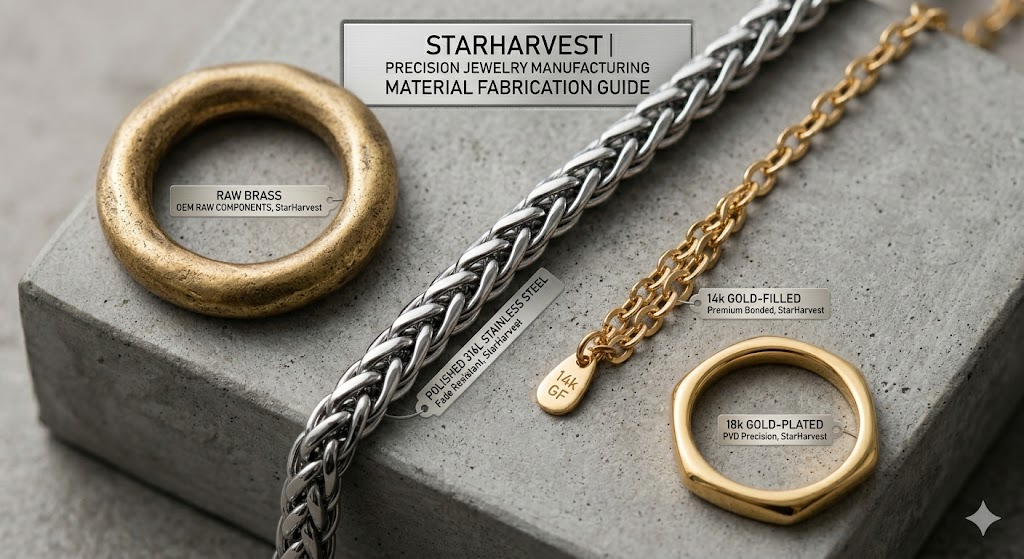
This sector notoriously enjoys some of the most aggressive retail markups in global commerce. For instance, a meticulously machined stainless steel necklace might require nominal capital to engineer within StarHarvest’s facilities, yet easily commands retail escalations of 300% to 500%. By deploying our proprietary gold plating solutions (specifically PVD vacuum technology), enterprises capture a top-tier luxury facade that justifies premium pricing while strictly suppressing baseline expenditure.
Strong Demand from Consumers
Consumers do not merely purchase accessories; they are emotionally driven to acquire them. Milestones such as nuptials, anniversaries, and personal achievements guarantee continuous market liquidity. Across global demographics, superior golden aesthetics project affluence and tradition, securing sustained commercial traction. When your inventory features extreme tarnish resistance, you effectively engineer lifelong customer loyalty and robust repeat purchasing cycles.
Diversified Business Models for Jewelry Brands
Online Sales: Drastically minimized operational overhead coupled with borderless geographical penetration.
Brick-and-Mortar: Cultivates profound brand credibility and facilitates tactile, high-conversion retail experiences.
Custom Jewelry: Tailored commissions inherently support elite pricing structures and augmented profit margins.
An intelligent synthesis of these distribution avenues, fortified by a formidable OEM partner, can seamlessly optimize your corporate revenue streams.
Challenges and Solutions in the Jewelry Industry
Executing a profitable enterprise involves navigating severe logistical hurdles, yet every barrier possesses a strategic countermeasure.
High Initial Investment
Procuring premium substrates requires substantial liquidity. Precious alloys, advanced surface treatments, and bespoke branding necessitate significant upfront fiscal commitments. These financial burdens multiply aggressively when navigating intermediaries or independent trading firms.
Solutions: * Source Smartly: Forge a direct operational channel with a mega-factory like StarHarvest to unlock transparent, uninflated wholesale pricing.
Phased Investment: Launch with highly curated capsule collections and execute phased scaling based on market validation.
Alternative Materials: Introduce surgical-grade 316L steel as an indestructible, financially optimal substitute for volatile solid gold markets.
Intense Market Competition and Saturation
Conglomerate labels heavily monopolize the sector, weaponizing their vast capital reserves. Consequently, independent founders frequently struggle to carve out viable market footholds.
Solutions: * Unique Designs: Exploit StarHarvest’s sophisticated R&D infrastructure to cast highly proprietary, bespoke stainless steel rings or avant-garde statement pieces.
Strong Branding: Cultivate an irresistible, highly distinct visual corporate identity.
Niche Marketing: Laser-focus on hyper-specific consumer segments (e.g., hyper-durable aquatic wear, ethically sourced luxury).
Shifts in Consumer Preferences
Modern consumer bases rigorously demand supply chain ethics. Integrating hazardous substrates or utilizing unverified labor practices risks immediate alienation of an expansive, highly lucrative demographic.
Solutions: * Ethical Sourcing: Align exclusively with internationally audited facilities. StarHarvest proudly maintains stringent RJC, SGS, and ISO accreditations, guaranteeing that our entire portfolio (including our eco-friendly brass) meets the most rigorous ethical benchmarks globally.
Transparency: Broadcast your sustainable manufacturing protocols to foster profound, unshakeable brand allegiance.
Emerging Trends Shaping the Jewelry Industry
The Growing Popularity of Lab-Grown Diamonds
Synthetic diamonds represent a financially accessible, ecologically sound, and rapidly expanding market reality. These engineered gemstones deliver massive reductions in COGS while satisfying eco-conscious mandates. Integrating flawless lab-grown iterations with our micro-precision metallic mounts yields an exceptionally profitable portfolio for progressive brands.
The Impact of AI and Augmented Reality on the Shopping Experience
Digital simulation dramatically accelerates e-commerce conversions. The fusion of Artificial Intelligence and Augmented Reality within retail interfaces is fundamentally disrupting consumer acquisition. Permitting a prospect to digitally “model” a heavy stainless steel bracelet eradicates purchase hesitation, significantly slashing return logistics and fiercely guarding your net profit.
Conclusion
Ultimately, is the jewelry enterprise financially lucrative? Unequivocally—provided you conquer a distinct market niche, ruthlessly optimize your fabrication expenditures, and anticipate shifting demographic appetites. Whether you are distributing tarnish-proof stainless steel chains via digital storefronts or crafting exclusive demi-fine luxury pieces, your commercial triumph fundamentally depends on tactical brilliance and securing a world-class manufacturing alliance with StarHarvest.
FAQs
1. Is starting a jewelry business worth it?
Affirmative, provided you deeply analyze your target demographic and aggressively mitigate fabrication costs. The industry’s uniquely inflated retail multipliers yield extraordinary returns when supported by a highly competent OEM infrastructure.
2. Is owning a jewelry store profitable?
Physical showrooms incur severe operational overhead yet establish unparalleled consumer confidence. Securing flawless physical inventory and executing mesmerizing visual merchandising are mandatory protocols for offsetting physical infrastructure expenses.
3. Is selling handmade jewelry profitable?
Artisanal designs command elite retail tags, but manual labor drastically throttles mass scalability. Migrating your bespoke concepts to a specialized commercial factory for light customization eliminates this severe growth bottleneck.
4. Is selling jewelry online profitable?
Digital commerce eliminates physical lease overhead and exponentially broadens your acquisition funnel. By delivering zero-tarnish, premium-grade items, online entities can scale violently with superior gross margins.
5. What’s the biggest challenge in the jewelry business?
Calibrating inventory liquidity against unpredictable market demand. Overstocking aggressively hemorrhages capital, which perfectly illustrates why StarHarvest empowers its brand partners with accelerated lead times, stable quality assurance, and highly elastic, scalable manufacturing solutions.

