
Physical Vapor Deposition (PVD) technology is currently disrupting the global fashion accessory sector by fusing avant-garde aesthetics with unprecedented mechanical endurance. It represents the ultimate manufacturing solution for brands targeting demographics who demand hyper-durable, aquatic-safe accessories without the volatile cost margins associated with solid gold casting or rigorous upkeep protocols.
Operating as an elite OEM jewelry manufacturer with over two decades of technical dominance since 2005, StarHarvest continuously fields inquiries from international labels regarding the actual operational lifecycle of these vacuum-treated pieces. But how robust is this technology in reality? Within this comprehensive internal dossier, we will dismantle the aggressive marketing myths and outline the genuine timeline you can expect premium PVD-coated inventory to remain structurally flawless and tarnish-free.
What is PVD Coating in Jewelry?
In commercial manufacturing, Physical Vapor Deposition (PVD) is a sophisticated vacuum-sealing process engineered primarily for stainless steel jewelry. The protocol fundamentally involves the vaporization of solid metallic targets—such as titanium, zirconium, or pure 18K gold—within a hyper-controlled vacuum chamber. These vaporized micron films then forge an unbreakable molecular integration directly with the substrate’s surface.
Consequently, vacuum-treated components engineered by StarHarvest exhibit profound immunity to oxidation, corrosive decay, and tarnishing. This high-tech surface modification not only amplifies structural rigidity but ensures the pieces remain entirely biocompatible for highly sensitive demographics.
What Are the Key Differences Between PVD Coating and Electroplating?
While both methodologies are highly sought-after surface finishes, they operate on entirely different metallurgical principles and are optimized for distinctly different base substrates.
Conventional electroplating utilizes electrical currents to chemically deposit precious layers—like rhodium or gold—over highly malleable, reactive cores, such as our premium brass jewelry. It yields a spectacular, high-gloss facade perfectly suited for complex geometries but requires meticulous consumer maintenance to prevent premature fading.
Conversely, our proprietary gold plating solutions utilizing PVD architecture deliver exponential scratch resistance and molecular adherence (the optimal choice for rigid steel substrates), whereas electro-chemical plating excels in delivering unparalleled visual brilliance and flexibility for softer alloy designs.
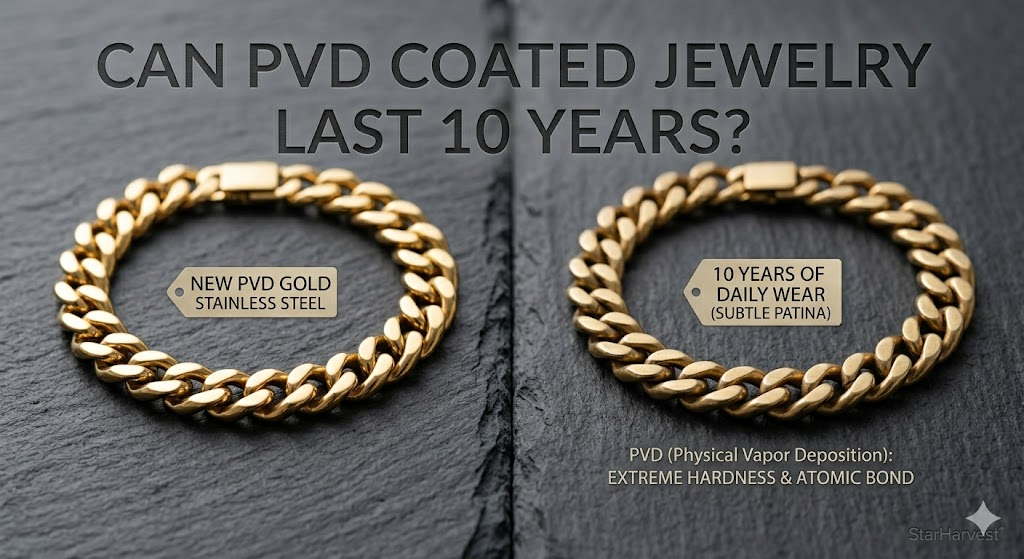
Is it Possible for PVD-Coated Jewelry to Last for 10 Years?
The objective, engineering reality is: No. So, what is the genuine operational lifespan? Assuming baseline consumer maintenance, top-tier vacuum-coated inventory manufactured by an elite facility like StarHarvest will preserve its structural brilliance for 2 to 5 years, frequently exceeding this timeframe under optimal wear conditions. However, the blanket marketing declaration promising a flawless 10-year lifespan under rigorous daily friction is largely an aggressive, fabricated sales tactic deployed by substandard suppliers to inflate short-term conversions.
Advantages of PVD-Coated Jewelry
Improved Durability
The vacuum process engineers a permanent molecular fusion with the steel core, generating a hyper-rigid exterior matrix. This protective shield effortlessly deflects localized scratches, chemical fading, and oxidative decay far more effectively than traditional flash washes. This uncompromising toughness guarantees that a heavy-duty stainless steel chain maintains its structural perfection over extended, multi-year timelines.
Versatility in Aesthetics
Our vacuum reactors can be precisely calibrated to produce a massive spectrum of pantones, encompassing 14K Gold, 18K Gold, Rose Gold, and ultra-modern Black configurations. This profound visual adaptability empowers retail labels to pivot alongside seasonal fashion algorithms rapidly, without ever sacrificing the underlying mechanical strength of the inventory.
Hypoallergenic Benefits
Vacuum-sealed waterproof accessories are a revolutionary asset for reactive consumer segments. When fused with StarHarvest’s medical-grade 316L steel, the deposit forms an absolute, impenetrable barricade, completely neutralizing any potential dermal contact with microscopic allergens or reactive irritants.
Factors Influencing the Durability of PVD-Coated Jewelry
While vacuum coatings are globally revered for their indomitable resilience, their exact chronological lifespan is heavily dictated by overlapping manufacturing and lifestyle variables:
Quality of the Underlying Material
The fundamental substrate dictates the coating’s ultimate success. Vacuum deposits anchor infinitely better and endure significantly longer on premium, anti-corrosive alloys. If the underlying metal relies on inferior 304 steel or unstable, cheap mixtures, the exterior film will prematurely delaminate. At StarHarvest, we mandate the exclusive use of surgical-grade 316L material to establish an unyielding foundational core.
Thickness of the PVD Coating
Augmented micron thickness generally correlates with superior abrasion resistance. However, over-application can induce structural brittleness and uneven pooling, demanding supreme engineering precision. A meticulously calculated micron deposit ensures a stainless steel ring retains maximum impact toughness alongside intricate, flawless design fidelity.
Wear and Maintenance Practices
Consumer behavioral patterns drastically influence the product’s degradation timeline. Intensive kinetic activities, manual labor, or frequent friction against abrasive textiles will inevitably compromise even the most formidable industrial treatments. Furthermore, improper storage—such as aggressively mixing pieces in cluttered compartments rather than isolating them—accelerates microscopic surface trauma.
Environmental Conditions
Continuous exposure to hyper-aggressive solvents (industrial perfumes, harsh cleansers), dense saline moisture, and intense ultraviolet radiation will systematically degrade the surface matrix over several years. This relentless environmental bombardment triggers micro-fading, incrementally shortening the optimal aesthetic lifespan the treated inventory was engineered to maintain.
Tips for Extending the Lifespan of PVD Jewelry
Proper Care and Maintenance
Brand partners must educate their retail base to routinely cleanse their stainless steel bracelet collections using a non-abrasive microfiber cloth and diluted, neutral soap to eradicate lipid and debris buildup. Consumers must vehemently avoid chemical solvents and abrasive tools. Crucially, items must be compartmentalized in soft velvet enclosures to prevent frictional scratching against harder mineral assets like diamonds.
Selecting High-Quality PVD Jewelry Pieces
The paramount strategic decision is aligning your brand with a veteran OEM facility that comprehensively masters the physics of vacuum deposition and exclusively deploys 316L medical steel substrates. Contracting a fully accredited manufacturing powerhouse like StarHarvest ensures flawless execution, stringent quality assurance protocols, and the exact micron calibration required to dominate your target demographic.
Conclusion
Vacuum-coated accessories flawlessly synthesize arresting visual appeal with indomitable mechanical strength, representing an exceptionally lucrative and strategic investment for modern brands and their sensitive-skin demographics. Yet, dispelling the exaggerated myth of a decade-long flawless lifespan is crucial for brand transparency; realistically, these premium coatings deliver 2 to 5 years of superlative, tarnish-free performance when supported by baseline consumer care.
FAQs
1. Is PVD Coating Safe for Sensitive Skin?
Absolutely. When deposited onto a 316L surgical base, the treatment acts as a profoundly hypoallergenic shield, effectively neutralizing the transfer of reactive allergens and guaranteeing 100% safety for highly sensitive demographics.
2. How Thick is the PVD Coating Layer?
Industry-standard vacuum films typically measure between 0.03 and 0.06 microns. For luxury labels demanding extreme mechanical endurance, StarHarvest effortlessly recalibrates our reactors to achieve customized, heavier micron parameters based strictly on your technical requirements.
3. Can PVD Coated Jewelry be Repaired?
Superficial micro-abrasions can occasionally undergo light professional buffing; however, catastrophic structural gouges that deeply penetrate the core substrate necessitate complete industrial stripping and recoating procedures.
4. Does PVD Coating Change the Color of Jewelry Overtime?
The metallic vapor itself does not undergo natural oxidation or darkening akin to raw sterling silver. It merely exhibits fractional visual fading if subjected to relentless abrasive friction, chemical assault, or extreme environmental hostility over a multi-year span.

