
Material science provides clear insights into why certain metals endure daily use better than others. For brands developing collections meant for regular wear, the physical properties of brass present a compelling case. This alloy’s performance stems from its specific composition and how it interacts with environmental factors. We will examine the mechanical and chemical characteristics that make brass a practical selection for custom brass jewelry lines designed for longevity and customer satisfaction.
Structural Integrity and Resistance to Deformation
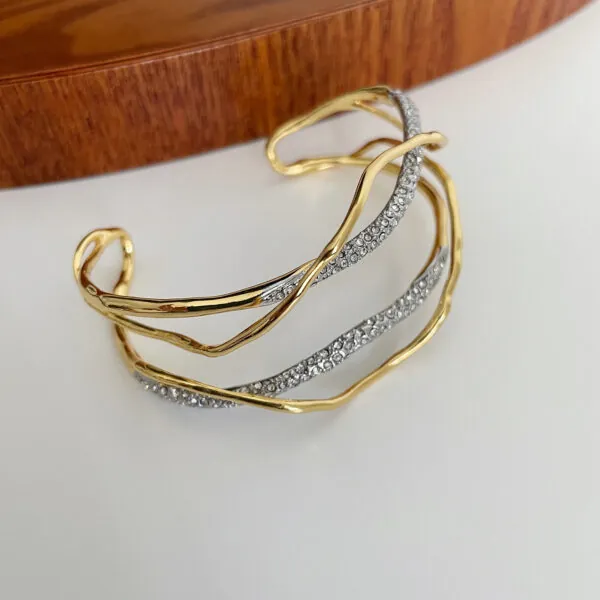
The fundamental durability of brass jewelry originates from its metallurgical structure. As an alloy primarily composed of copper and zinc, brass achieves a favorable balance between hardness and malleability. This balance gives it a higher tensile strength than pure copper or silver, meaning it better resists bending, cracking, or permanent deformation under stress. For a brass jewelry manufacturer, this material property is crucial. It allows for the creation of pieces with fine details, like clasps and hinges, that maintain their structural integrity over time. This reliability reduces the likelihood of product returns and enhances the customer’s long-term experience with the jewelry.
Corrosion Resistance and Protective Patina Formation
A key advantage of brass for everyday wear is its inherent resistance to corrosion. The copper within the alloy reacts with atmospheric elements to form a protective layer, known as a patina. This patina, which develops gradually, actually shields the underlying metal from more aggressive corrosive elements. While some customers may prefer the original bright finish, this natural aging process does not compromise the item’s integrity. As a proficient OEM/ODM brass jewelry factory, we can also apply modern sealants to slow this process for mid-to-large brands who wish to maintain the initial luster, offering your label total flexibility in the final product’s aesthetic lifecycle.
A Comparative Analysis with Alternative Materials
When evaluated against other common materials, the functional advantages of our factory-direct brass become clear. Compared to cheaply plated base metals, solid brass does not have a thin layer that can wear off to reveal a different material underneath; its durability is consistent throughout the piece. While sterling silver is softer and more prone to scratches, and some costume jewelry metals can easily tarnish or break, brass offers a superior middle ground of robustness, aesthetic quality, and cost-effectiveness. This makes it a strategically sound choice for fast-growing e-commerce brands building a line of OEM/ODM brass jewelry that is designed to be both accessible and enduring in a competitive marketplace.
Engineering Jewelry for Long-Term Use
The selection of a base metal is a decision that directly impacts a product’s lifespan and a brand’s reputation for quality. The combination of mechanical strength and natural corrosion resistance makes brass a technically sound option for jewelry intended for daily use. Its ability to withstand the rigors of everyday activity while developing a character of its own provides a unique value proposition. At Star Harvest, we leverage these material properties in our work as a brass jewelry manufacturer. We guide our partners in selecting the right alloys and finishes to ensure their custom brass jewelry collections meet practical performance standards, resulting in products that customers can rely on day after day.

