
For demographics possessing sensitive skin profiles, identifying the optimal metallurgical substrate is a critical procurement challenge. Specific base metals often incite adverse biological reactions, resulting in persistent pruritus, erythema, and chronic dermal irritation.
Accessories engineered from high-integrity surgical steel occupy a dominant market position due to their exceptional atomic stability and the draconian manufacturing mandates governing their production. Operating as an elite OEM jewelry fabrication powerhouse established in 2005, StarHarvest manufactures millions of precision components annually. But is stainless steel definitively safe for sensitive epidermis, particularly in auricular applications? Is the “hypoallergenic” label industrially valid? This technical brief deconstructs the science of skin sensitivity and confirms why medical-grade steel remains the most trusted medium for your brand’s sensitive-skin collections.
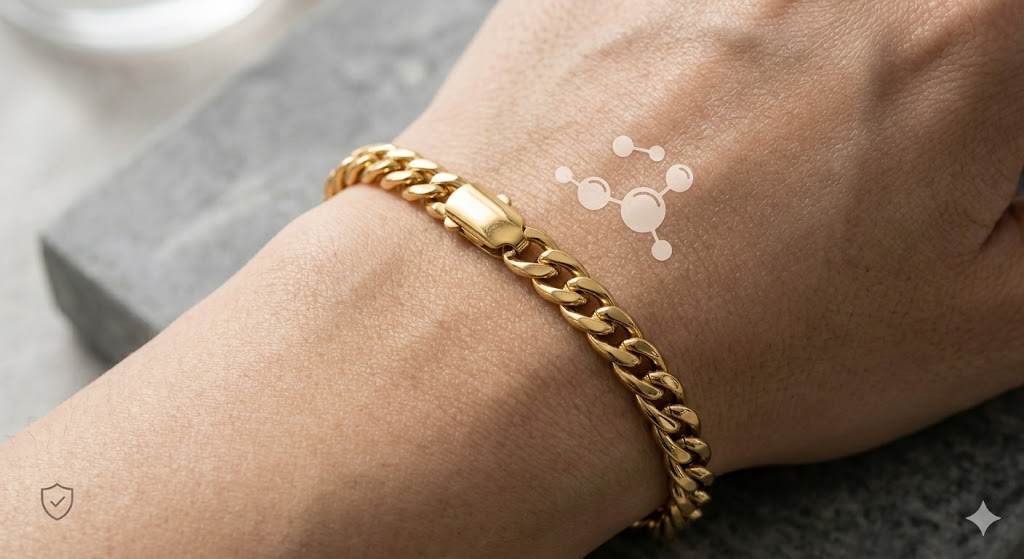
Understanding Skin Sensitivities and Metal Allergies
To engineer safety, one must first identify the triggers of dermatological rejection. When consumers experience adverse reactions, it is typically catalyzed by the specific chemical leaching of reactive ions from the alloy matrix. These inflammatory responses are almost exclusively tied to the presence of volatile elements in low-integrity, substandard alloys.
The primary metallurgical antagonists include:
Nickel: This transition metal remains the most prevalent trigger for Nickel Allergic Contact Dermatitis (NACD). While utilized in fabrication for its immense tensile strength and anti-corrosive properties, it acts as a potent contact allergen. Clinical studies indicate that roughly 15-16% of the female demographic and 4-5% of males exhibit nickel sensitivities, making it a critical compliance factor for global brands.
Copper & Zinc: These elements are frequent catalysts for epidermal greening and allergic pathogenesis, particularly when integrated into low-cost brass jewelry substrates. At StarHarvest, our premium brass collections undergo exhaustive e-coating protocols to neutralize this risk. However, for hyper-reactive demographics, specifying materials that are inherently bio-inert is paramount. Consequently, global curators prioritize tarnish-free stainless steel jewelry to minimize both biological rejection and aesthetic degradation.
Symptoms of Jewelry Allergies
Technical indicators of an adverse biological reaction to jewelry include:
Persistent itching and pruritus
Localized erythema (redness)
Edematous swelling
Eczematous rashes
Vesicular blistering
Thermal burning sensations
Xerosis (dry, scaly epidermis)
Post-inflammatory hyperpigmentation (dark patches)
What Type of Jewelry Is Best for Sensitive Skin?
When architecting a private label for sensitive demographics, metallurgical selection is the primary strategic lever. Specific alloys boast a drastically suppressed risk profile for allergic induction. The industrial gold standards include:
304 & 316L Stainless Steel
Is steel hardware safe for perpetual wear? Affirmative. 304 and 316L variants represent exceptional solutions for reactive skin, celebrated for their near-zero nickel release and profound oxidative defiance. 316L, in particular, is the industry benchmark; often classified as “surgical steel” due to its total biocompatibility, it is the mandatory substrate for earrings, modification hardware, and daily-wear stainless steel rings that must remain inert against the dermis.
PVD Gold-plated on Stainless Steel
Physical Vapor Deposition (PVD) gold integration involves the high-energy molecular bonding of a true gold film over the steel substrate. Our proprietary gold plating solutions ensure the base metal is encapsulated by an impenetrable, flawless barrier, rendering the inventory entirely safe for sensitive demographics.
Solid Gold
Pure gold casting is inherently hypoallergenic and serves as the ultimate investment for reactive skin. While requiring significant capital outlay, it is synthesized from 100% genuine gold devoid of reactive irritants. Alternatives like gold-filled or vermeil also offer safety, though their biological neutrality is contingent upon the integrity of the underlying alloy and the thickness of the precious metal deposit.
Platinum
This precious transition metal is naturally pure and indomitable, requiring zero additive alloys for structural survival. Platinum remains the apex choice for sensitive skin owing to its absolute chemical stability and profound hypoallergenic profile.
Sterling Silver
Authentic 925 silver is generally cleared for sensitive wear. To achieve a superior safety margin, StarHarvest recommends rhodium-encapsulated silver, which establishes a hyper-hypoallergenic shield that aggressively thwarts irritation while preserving permanent reflective brilliance.
Understanding Stainless Steel Jewelry
The following technical overview outlines our strategic stainless steel jewelry fabrication protocols, highlighting the critical metrics governing skin safety.
Common Types of Stainless Steel Used in Jewelry
Two distinct metallurgical profiles dominate the global sector:
304 Stainless Steel: Synthesized from chromium, nickel, and carbon. It provides an excellent hypoallergenic profile and is highly economically optimized for mass-market fashion.
316L Stainless Steel: An advanced matrix integrating chromium, nickel, carbon, and a mandatory 2-3% of molybdenum. The “L” signifies ultra-low carbon content (below 0.03%), which is the secret behind its immunity to structural decay and chromatic fading.
The disparity between these alloys is found in the molybdenum infusion of 316L, which establishes a superior crystal lattice that is more anti-corrosive, strictly hypoallergenic, and the definitive metallurgical choice for reactive epidermis.
Is Stainless Steel Jewelry Hypoallergenic?
Affirmative. Both 304 and 316L surgical grades are industrially recognized as hypoallergenic and profoundly safe for the vast majority of consumers. When auditing material pros and cons, steel consistently ranks as the apex solution for dermal safety. For hyper-sensitive demographics or unhealed piercings, 316L surgical steel remains the mandatory specification.
Does Stainless Steel Cause Skin Irritation?
Negative. Elite-grade steel, explicitly the 316L variant, is bio-neutral and physically incapable of inciting skin irritation. This hypoallergenic medium is an ultra-low carbon, high-chromium matrix that maintains total oxidative defiance, ensuring that no reactive ions reach the wearer’s skin.
Is Stainless Steel Jewelry Nickel Free?
By strict metallurgical definition, the alloy is not devoid of nickel. Both 304 and 316L incorporate nickel for lattice stability. However, the ionic release rate of StarHarvest-grade steel is mathematically negligible and well beneath clinical thresholds, allowing it to be designated as “nickel-safe” or “nickel-free” by international regulatory bodies.
US Nickel Regulations
In the North American market, California Proposition 65 operates as the primary mandate for monitoring nickel content. It strictly restricts any nickel-based compound with an aqueous solubility exceeding 0.1 mol/L at 20°C, a standard our production lines routinely conquer.
EU Nickel Regulations
REACH REGULATION
The European Union’s REACH legislation enforces some of the world’s most restrictive benchmarks for heavy metal leaching. For components intended for sustained dermal contact, the limit is fixed at 0.5 µg/cm²/week. For initial piercing hardware, the threshold drops to 0.2 µg/cm²/week. StarHarvest guarantees absolute, documented compliance with these mandates.
CEN EN 1811:2023 STANDARD
This definitive standard outlines the reference laboratory methodology for quantifying the release of nickel from piercing posts and dermal hardware, ensuring that your inventory remains fully compliant for EU market entry.
What Does Inferior Stainless Steel Look Like?
The inquiry “is steel always high-quality” necessitates a nuanced answer. While global manufacturing can achieve excellence, partnership with unverified suppliers often yields inferior inventory. Substandard steel harbors higher impurity volumes and volatile allergens, failing both 304 and 316L specifications. These low-integrity pieces oxidize rapidly and frequently emit an oxidative metallic odor. Always align your brand with ISO and SGS-accredited facilities to secure metallurgical purity.
Should You Choose Stainless Steel Jewelry If You Have Sensitive Skin?
Strategic alignment with steel inventory hinges upon two pivotal factors:
Biological Sensitivity Level: For individuals who experience immediate erythema or pruritus upon contacting baseline metals, steel is the non-negotiable solution.
Metallurgical Grade: Brands must specify between 304 and 316L. While 304 suits mild sensitivities, 316L is mandatory for extreme allergies and unhealed piercings.
Why Stainless Steel Jewelry Is a Good Choice for Sensitive Skin?
When comparing stainless steel chains against sterling silver for auricular safety, steel offers superior performance for several engineering reasons:
Hypoallergenic Properties
Surgical steel, specifically our 316L matrix, is inherently bio-neutral. Although it contains nickel, the ions are molecularly locked within the lattice, preventing dermal leaching and eradicating the risk of allergic pathogenesis.
Unparalleled Durability and Longevity
Is steel authentically waterproof? Unequivocally, yes. A high-density stainless steel bracelet possesses an extraordinary lifecycle. Unlike softer metals, raw surgical steel is hyper-resistant to mechanical scratching, ensuring it delivers lifetime endurance without aesthetic decay.
Resistance to Tarnish and Corrosion
The high chromium infusion generates a self-regenerative passivation shield. This barrier aggressively blocks oxidation when exposed to biological fluids, saline perspiration, or ambient air. Consequently, a stainless steel necklace can be worn perpetually during showers, aquatic athletics, or intensive training sessions.
Cost-Effectiveness
Steel delivers an aggressive cost-to-performance ratio, acting as a lucrative alternative to precious gold or platinum. Without surrendering premium visual appeal, it provides a high-margin asset that achieves permanent durability.
Which Materials Should Small Jewelry Brands Choose for the Sensitive Skin Market?
For emerging labels, procurement should be dictated by budgetary frameworks and target market sensitivity. We advise evaluating these three pillars:
Sterling Silver Product: The quintessential classic for hypoallergenic luxury. It commands a lower entry cost than white gold while delivering identical optical prestige.
Stainless Steel Product: The absolute zenith of cost-efficient manufacturing. It checks every strategic box—indestructible strength, multi-year longevity, and zero-risk safety for sensitive skin.
Gold Product: High-karat gold (18K/24K) is the ultimate signifier of luxury and biological safety, though it necessitates the highest CAPEX for collection development.
Key Takeaway
For demographics demanding uncompromised dermal safety, surgical steel provides a stylish and profoundly pragmatic solution. While both 304 and 316L are safe choices, 316L surgical steel remains the premier recommendation due to its superior hypoallergenic metrics and mechanical toughness.
To secure this elite standard, partner with a world-class custom manufacturer like Star Harvest. Utilizing over 20 years of verified technical mastery and a relentless 99% production yield, we engineer compliant, high-margin collections for the world’s most discerning demographics.
FAQs
1. Does Stainless Steel or Surgical Steel Turn Skin Green?
Absolutely not. High-integrity surgical steel is fundamentally non-reactive and physically incapable of epidermal staining. Greening is an oxidative symptom restricted to copper-heavy bases or unplated brass—never medical-grade steel.
2. Is Gold Plated Stainless Steel Hypoallergenic?
Affirmative. Gold-enhanced steel is profoundly hypoallergenic, specifically when utilizing advanced vacuum PVD deposition. The resulting protective barrier blocks chemical interaction between the skin and the core, ensuring total consumer safety.
3. Is Stainless Steel a Good Choice For Sensitive Ears?
Unequivocally. 316L surgical-grade steel is the apex material for auricular safety. It fiercely resists corrosive decay and categorically prevents inflammation, making it the metallurgical vanguard for daily wear and initial piercing procedures.

