
For UK jewelry and accessories brands, brass cannot be ignored. It gives a warm, gold-like look, keeps unit costs tight, and works for bold, on-trend designs. But the question most product teams ask is, does brass jewelry tarnish easily in a cool and humid climate such as the UK’s?
In short, yes. Due to the reaction of the copper in the brass with moisture, oxygen, and the acid in the skin, tarnish will be more visible when pieces are subjected to dampness, sweat, and makeup. For mid-to-large brands with OEM partners, it does not matter when tarnish occurs, but rather how much you can mitigate it in terms of timing by using better alloys, plating and e-coating, and process control, and then put it in perspective by customers, with instructions on how to care about it, so that it can never come under negative expectations or reviews.
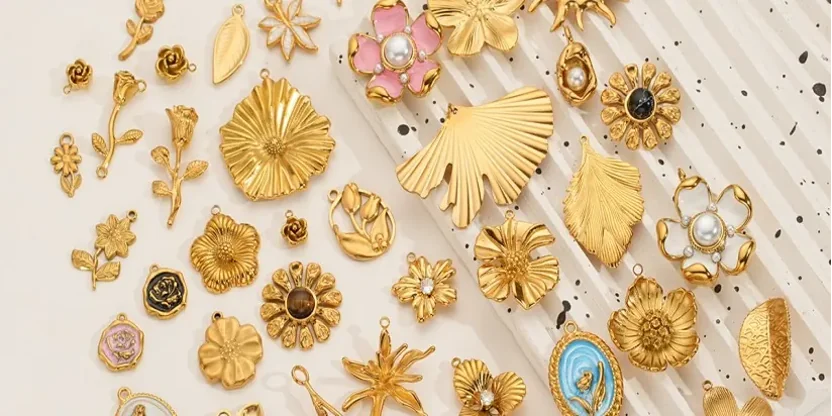
What Causes Brass Jewelry to Tarnish?
Brass is an alloy of copper and zinc. When it remains in the air with moisture and traces of sulfur compounds, the copper part reacts to form dark copper sulfides on the surface. This is what you see as tarnish. In the UK, this reaction gets a helpful push from the environment. Relative humidity is high for much of the year, rain is recurrent, and temperatures are mild. Consequently, a thin film of moisture can linger on jewelry surfaces instead of evaporating quickly.
That gentle and steady dampness gives the chemistry more time to work. So, the question for many buyers becomes not just “does brass jewelry tarnish easily” but how brands can slow that reaction down. The good news is that with the right treatments and finishing choices, tarnish shifts from a constant headache to something you manage over the lifecycle of the product.
How to Prevent Tarnish – Manufacturing Control
Here are 2 methods to prevent tarnish from the source:
1. E-Coating and Lacquering at OEM Level
An OEM process will lock in the finish after polishing or plating with a clear e-coat or lacquer. It creates a thin polymer film that blocks sweat, cosmetics, and air from reaching the metal surface. For buyers who ask “Does brass jewelry tarnish easily” in the UK, this step is where you buy real time. Consistent film thickness, controlled curing, and adhesion testing convert a naturally reactive base into a stable, long-wear surface that holds color through normal consumer use.
2. Anti-Tarnish Packaging for Shipping and Storage
Once the finish is protected, the next risk point is the box, not the body. Therefore, intelligent brands will specify anti-tarnish papers, strips, or pouches that will soak corrosive gases inside polybags and master cartons. This type of packaging plan can be easily scaled at the OEM level, it would introduce minimal cost to the unit, and it would ensure inventory would appear fresh during transport and on warehouse shelves. As a result, the products appear on shelves in a clean and bright finish, which is comparable to the photography on your PDP.
How to Clean Tarnished Brass Jewelry – Post-Purchase Care
1. Simple Everyday Care Brands Can Share
Care is the first line of defense, long before anyone asks “does brass jewelry tarnish easily” or not. You can keep the guidance very simple for customers. For instance, put pieces on last, after skincare and perfume, take them off before showers, workouts, or swimming, and dry them gently if they get splashed by rain. Suggest storing items in individual pouches or boxes, away from bathrooms and radiators. So, they are always dry and don’t rub against each other.
2. Easy Cleaning Options You Can Recommend
From there, you can offer one or two easy cleaning routes as a brand perk. A soft polishing cloth for fashion jewelry suits light dullness. It lets customers refresh shine without liquid chemicals. For profound cleaning, you can point them to a mild brass-safe cleaner from an upright supplier, as well as remind them to follow instructions, rinse, and dry before wearing or storing.
FAQs
1. How long does it take for brass to tarnish?
Tarnish doesn’t appear on a static schedule. That’s because it counts on moisture, skin chemistry, and how repeatedly the piece is tattered. With recurrent wear in a damp environment, a light dullness might show within weeks. Meanwhile, display stock stored in dry, controlled conditions may stay bright for many months. For brands, the key is to design QC and care messaging around ranges rather than exact timeframes. Hence, expectations are always convincing.
2. Does brass-plated jewelry tarnish faster?
Plated brass behaves differently. The reason is that the outer layer (gold or rhodium) shields the base metal at first. Nonetheless, once that layer wears through on high-friction spots, the bare brass can tarnish quite speedily. Thicker, well-controlled plating and a good topcoat slow this down. Accordingly, specifying microns, test methods, and wear simulations with your OEM partner is indispensable if you want consistent performance across large runs.
3. Can brass jewelry be returned to its original shine after severe tarnish?
Heavy tarnish looks disquieting to consumers. But in many cases, the underlying metal is still fine and can be brightened again. At scale, this might be done by professional repolishing or refinishing. On the other hand, end customers can use a brass-safe polish or a specialist service for premium lines. For brands, it’s smart to frame this as part of a care-and-refresh cycle rather than a defect. Also, decide in advance which price tiers justify refurbishment vs. replacement.
Conclusion
At Star Harvest, we’ve built our own SH electroplating system. In lab tests, it reaches a “no fading for 3 years” benchmark. So, your brass and stainless steel pieces hit a clear, tested color retention target. While changing gold plating thickness from 0.1 μm for short seasonal drops to 1.5-2.0 μm or more for 3-5+ years of wear, we fine-tune cost and durability for each line. Then, questions like “does brass jewelry tarnish in water” become a design choice. We back every spec with salt-spray, artificial sweat, and XRF thickness tests before mass production. This helps brands give care promises to customers and keep returns and warranty costs under control.