
For Australian jewelry brands, the men’s category has historically been a secondary focus—an afterthought of cufflinks and wedding bands. However, the landscape has shifted dramatically. The cross chain necklace has evolved from a niche religious symbol or occasional wear item into a daily lifestyle essential. Driven by global pop culture moments and a localized shift in Australian men’s fashion, this category now represents a high-retention entry point for medium-to-large jewelry enterprises.
Yet, this opportunity comes with a hidden volatility. The Australian consumer is uniquely demanding. The combination of an active, outdoor lifestyle and a skepticism toward “fast fashion” quality means that brands cannot simply import generic costume jewelry and expect longevity. To succeed in 2025, procurement teams must understand the nuance of “Rugged Minimalism” and partner with manufacturers who treat jewelry not as decoration, but as engineered accessories.
The Shift to “Rugged Minimalism” in Australian Men’s Fashion
The days of ostentatious, “bling-heavy” costume jewelry are receding. In their place, a new aesthetic has emerged which we define as “Rugged Minimalism.” This trend favors jewelry that possesses the visual weight and premium finish suitable for a boardroom meeting, yet is engineered to withstand the rigors of the Australian weekend—whether that involves surfing at Bondi, high-intensity training in the gym, or the physical demands of trade work.
For the modern Australian male, a cross chain necklace mens style is not an accessory to be removed before a shower; it is an extension of identity intended to be worn 24/7. This “always-on” wear pattern changes the engineering requirements of the product entirely. A necklace that looks pristine in a velvet box but tarnishes after a week of exposure to ocean salt or humidity will not just result in a return; it will permanently damage brand equity. The consumer expectation is now for “life-proof” luxury—pieces that bridge the gap between high-fashion aesthetics and industrial durability.
What Specifications are Selling?
To capture this market, brands must look beyond the visual design and scrutinize the metallurgy. The winning products in the 2025 outlook share specific technical characteristics that separate professional brands from drop-shipping hobbyists.
1. Material Science: The End of Zinc Alloy
The most significant shift is the mass migration toward “Performance Metals.” In the past, fashion jewelry relied heavily on zinc or copper alloys due to their low cost and ease of casting. However, these soft metals are notorious for the “green neck” reaction—a fatal flaw for any brand claiming quality.
The market standard has shifted to 316L Stainless Steel. This material offers the substantial weight and cool, silver-tone luster of platinum but is hypoallergenic and impervious to rust. For brands targeting Australian coastal demographics, 316L is non-negotiable. It provides the “heft” that men associate with quality, without the fragility of soft precious metals or the corrosion risks of cheap base alloys.
2. The “Layered” Aesthetic and Chain Profiles
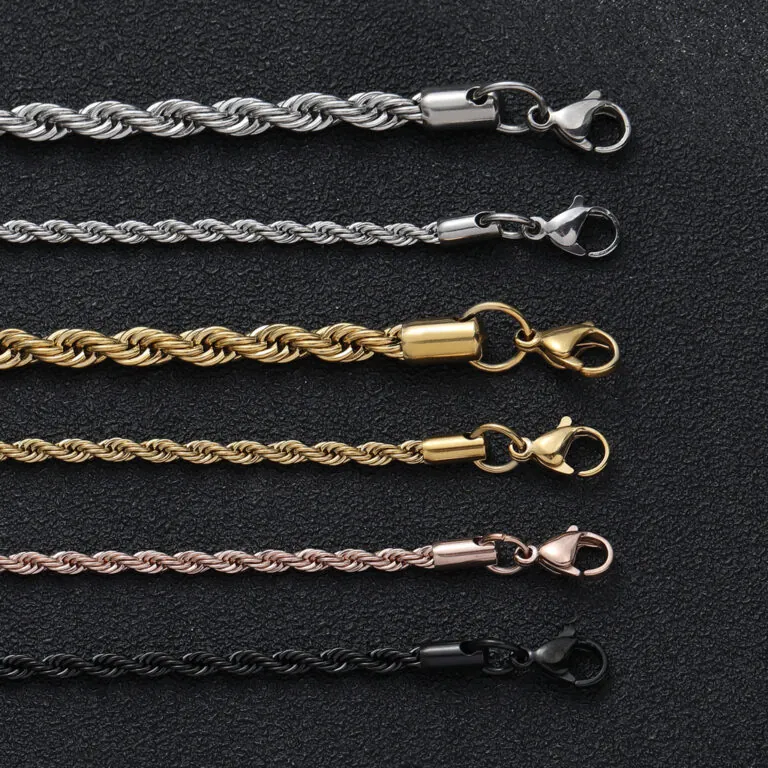
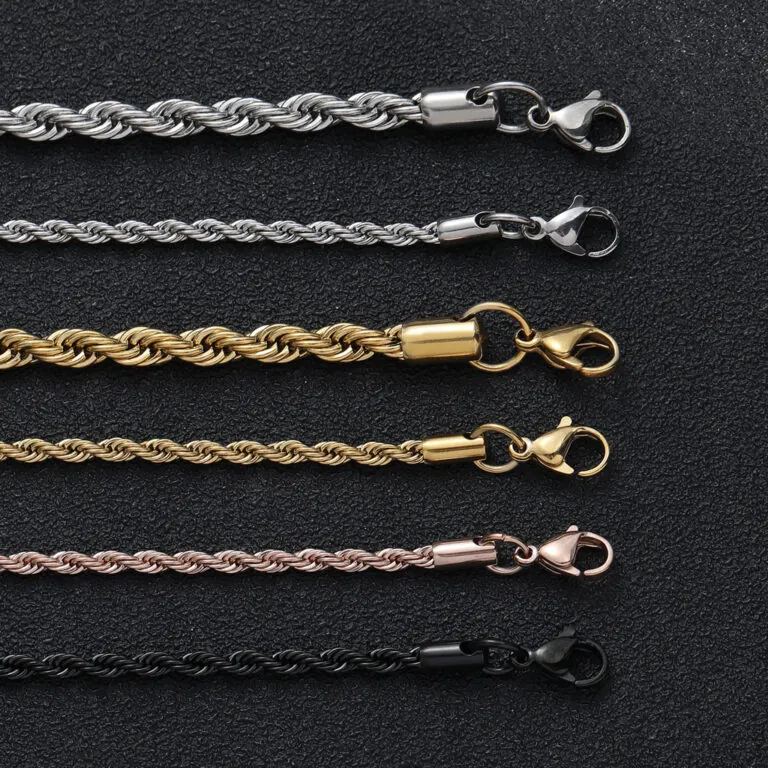
Single, delicate chains are being replaced by robust, curated sets. A major trend involves selling a men’s cross necklace with thick chain profiles. Procurement teams should look for pre-stacked configurations, such as a 50cm plain Cuban link paired with a slightly longer 55cm pendant chain. This adds visual depth and increases the perceived value of the SKU, allowing for higher retail price points.
3. Surface Engineering: PVD vs. Flash Plating
Perhaps the most critical differentiator is the plating technology. Australian men desire the aesthetic of gold without the softness or price of 18k solid gold. However, traditional “flash plating” (a thin layer of gold applied via simple electrolysis) often fades within months.
The solution driving the market is Physical Vapor Deposition (PVD). This vacuum coating process bonds the gold color to the steel substrate at a molecular level. Unlike wet plating, which sits on top like paint, PVD becomes part of the surface. This technology allows brands to offer 1–2 year “anti-tarnish” guarantees, a powerful marketing claim that directly addresses the primary consumer pain point.
Overcoming Consumer Skepticism: The “Anti-Dropship” Strategy
A deep dive into Australian consumer forums, such as Whirlpool and Reddit’s Australian fashion subreddits, reveals a growing cynicism. Consumers are increasingly wary of “handmade” brands that appear to be reselling generic Alibaba goods. They are actively searching for technical transparency.
Marketing terms like “Gold Tone” are being rejected in favor of specific descriptors like “Surgical Grade Steel,” “PVD Coated,” and “Waterproof Engineering.” Brands that can substantiate their quality claims with technical specs are winning trust. Conversely, brands that fail to address issues like clasp failure—specifically the weakness of standard lobster clasps—are losing market share. There is a specific demand for custom, heavy-duty clasps that feel as secure as the chain itself, reinforcing the “rugged” narrative.
Why Generalist Factories Fail
For scaling brands, the choice of manufacturing partner is the single biggest variable in the unit economics of quality. The “Manufacturer Mismatch” is a common trap: partnering with a factory specialized in low-cost promotional items to produce high-retention jewelry.
A factory optimized for zinc alloy casting simply does not have the machinery to machine 316L Stainless Steel effectively. Steel requires higher processing temperatures, CNC machinery, and harder tooling. Furthermore, generalist factories rarely possess the in-house PVD capabilities required to control color consistency over large production runs. To compete with market incumbents like Merchants of the Sun or RoseGold & Black, brands need a partner who treats jewelry manufacturing with the precision of watchmaking.
Partner Focus: Star Harvest Jewelry
For brands seeking to secure their supply chain with a partner that understands these high stakes, Star Harvest stands out as a premier OEM/ODM solution. Unlike generalist competitors, Star Harvest has specialized exclusively in high-quality Stainless Steel and Brass manufacturing, rejecting the low-end alloy market entirely.
1. Verified Durability Standards
Star Harvest’s infrastructure is built for the “performance jewelry” era. Their proprietary PVD vacuum coating technology is tested to withstand the EN 12472 artificial sweat test, verifying color retention for 3+ years. This allows your brand to confidently market “sweatproof” and “ocean-ready” products without fear of mass returns.
2. Ethical and Scalable Production
In an era where “Ethical Luxury” is a key USP, Star Harvest’s certification by the Responsible Jewellery Council (RJC) provides the transparency Australian consumers demand. Furthermore, their capacity of 4 million pieces annually, combined with a flexible MOQ starting at 500 pieces, ensures they can support your brand from a test collection to mass-market dominance.
3. Customization and OEM Engineering
Finally, their OEM capability allows for true differentiation. Rather than selling a generic cross, Star Harvest can custom-mold unique designs—adding your logo, creating custom beveled edges, or integrating unique textures like brushed matte finishes. They offer access to reinforced, heavy-duty components that pass strict tensile strength tests, ensuring your product survives the active Australian lifestyle.
Stay Connected with Star Harvest to Gain the Latest Market Trend
For procurement managers, the path to capturing this market lies in aligning with a manufacturer that masters the physics of the product. By partnering with Star Harvest, your brand can deliver a cross and chain necklace that is not just a fashion accessory, but a durable companion to the Australian way of life.

