In the competitive landscape of the jewelry industry, brands frequently pour the majority of their resources into the visible spectrum of product development: avant-garde design drafts and aggressive marketing campaigns. While these are essential for capturing initial attention, they often overshadow the silent backbone of mass production: jewelry casting molds.
For medium-to-large jewelry brands, an unsuitable mold choice—whether it involves poor material selection for the master pattern or inadequate shrinkage compensation—does not just affect a single batch. It consumes resources continuously throughout the entire product lifecycle. From the initial casting defects to higher return rates due to structural weakness, the cost of a poor mold is paid not in the factory, but in your brand’s reputation.
How Molds Directly Impact Core Business Elements
The quality of jewelry casting molds acts as a force multiplier—either positive or negative—across four critical business dimensions.
1. Brand Positioning and Customer Perception
Your manufacturing process must mirror your brand promise.
- The “Handmade” Aesthetic: Soft silicone molds (Shore A-20 to A-40) are excellent for capturing organic textures and intricate details, preserving the “artist’s touch” in mass production.
- Precision and Modernity: For geometric, high-fashion designs, the integrity of the mold defines the sharpness of the edges. Molds for resin casting jewelry masters (derived from high-resolution SLA/DLP printing) allow for micron-level precision that conveys a sense of high-end engineering.
2. Lifecycle and After-Sales Costs
A mold determines the structural integrity of the final piece. If a mold allows for turbulence during the metal flow, it introduces porosity (tiny air bubbles) or shrinkage defects.
These internal flaws make jewelry fragile. A ring that snaps after three months does not just cost you a refund; it costs you a customer. Durable molds lead to denser castings, reducing the “orange peel” effect during polishing and minimizing after-sales repairs.
3. Supply Chain Flexibility and Time-to-Market
Different molding processes dictate your agility.
- Rubber Molds:Economical and standard for simpler designs, but may require slower cooling times.
- Metal Molds: High upfront cost ($500–$2,000+), but they offer rapid cycle times and durability for tens of thousands of units.
- Reorder Capability: A high-quality mold library allows you to fulfill repeat orders in days rather than weeks, keeping your best-sellers in stock.
4. Pricing Power and Profit Margin
There is a direct trade-off between amortization and unit cost. Investing in a higher-grade wax mold casting jewelry process might increase initial tooling costs, but if it reduces the rejection rate by 5% and polishing time by 20%, the per-unit cost drops significantly, widening your profit margin on large volume runs.
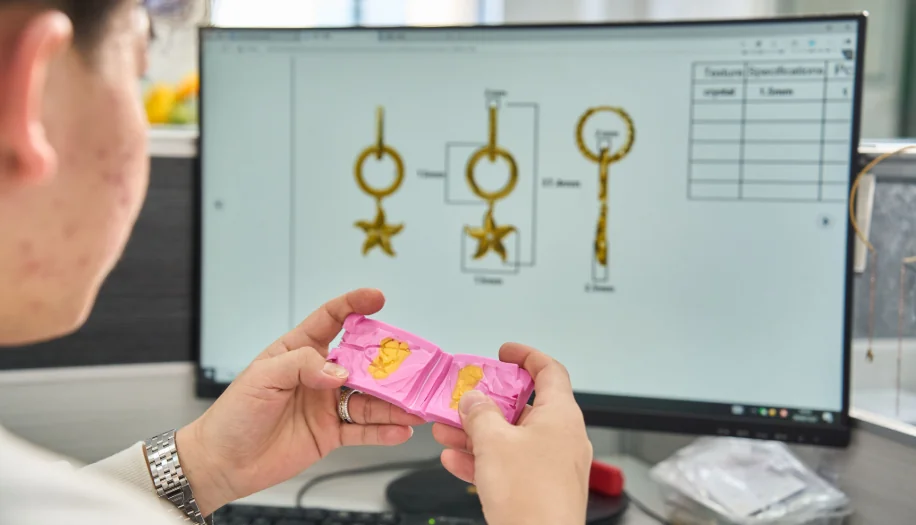
Strategic Decision Analysis: Making the Right Choice
There is no “one-size-fits-all” mold. Your choice must be calibrated against your specific business constraints and goals.
1. Target Customer Base
- Luxury Market: This segment operates on a low-volume, high-consistency model. Customer expectations are exceptionally high, demanding virtually zero defects and flawless surface quality. Vacuum casting with added pressure and premium silicone molds can eliminate porosity, ensuring every piece is perfect.
- Mass Market: The driving force is high volume and competitive pricing. The goal is to fulfill massive orders efficiently. Here, vulcanized rubber molds are often the most practical and economical choice. They offer the durability and speed necessary for high-volume production runs, perfectly aligning with the market’s core needs.
2. Core Materials
Resin casting molds for jewelry patterns are critical when working with complex geometries that require clean burnout without ash residue. If you are casting in platinum or high-karat gold, the investment in high-strength, heat-resistant mold materials is non-negotiable to prevent investment collapse. However, for metals like brass or stainless steel, the risk and cost implications of using less robust molds are significantly lower.
3. Design Complexity
- Minimalist: Requires smooth surfaces. Any mold imperfection is immediately visible.
- Complex/Filigree:Requires high-tear-strength molds that can be removed without breaking delicate prongs or details.
- Expected Production Volume:
- Limited Edition (Under 500 units): Direct 3D printing of castable resin or low-cost rubber molds yields the best ROI.
- Large-Scale (10,000+ units): Metal molds or high-endurance silicone are required to maintain dimensional consistency over thousands of injections.
How Star Harvest Optimizes Your Molding Strategy
At Star Harvest, we understand that we are not just manufacturing jewelry; we are manufacturing your profit margins. As a premier OEM/ODM partner for the German and global markets, we leverage nearly 20 years of experience to transform mold selection from a risk into a competitive advantage.
1. Diverse Tooling Craftsmanship Matching Brand Positioning
We do not force a single process on every client. Whether your brand requires the organic feel of lost-wax casting or the laser-sharp precision of resin casting molds for jewelry, we customize the tooling approach. Our capability to produce highly elastic silicone molds ensures that even the most complex filigree designs are replicated with fidelity.
2. Durable Materials to Reduce Rework and Returns
Quality starts before the metal melts. We utilize advanced vacuum casting and vacuum investment mixing to eliminate gas bubbles and porosity. By ensuring the wax mold casting jewelry process is flawless—verifying flask temperatures (up to 1300°F for detailed pieces) and using clean-burning materials—we deliver dense, durable castings. This directly translates to lower return rates and higher customer satisfaction for your brand.
3. Flexible Production and Quick Reorders
Our facility is designed for agility. With a capacity of over 500,000 pieces per month, we manage a vast library of client molds. This allows us to switch from prototyping to mass production seamlessly, ensuring you can restock high-performing SKUs without lead-time delays.
4. Tailored Solutions for Scalability
We perform the “Make vs. Buy” analysis for you. For small batches, we utilize cost-effective rapid prototyping. For high-volume orders, we engineer robust molds that spread the initial cost over thousands of units, driving your per-unit cost down to fractions of a dollar.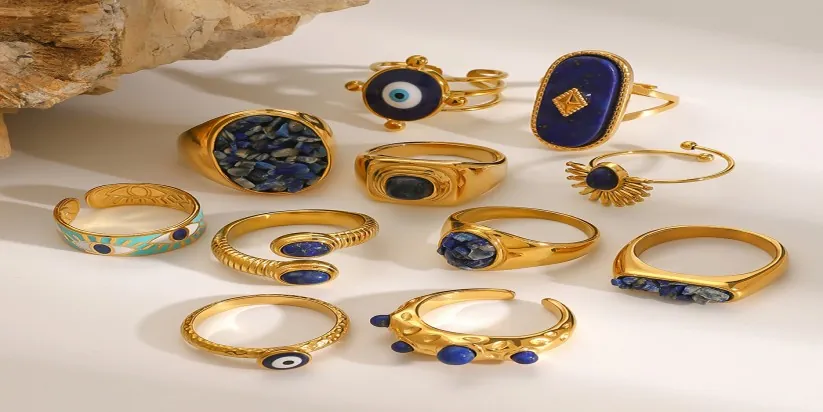
Wrapping-up
In today’s highly competitive jewelry market, true efficiency does not begin on the production line—it begins at the jewelry casting molds. From brand perception and durability to supply-chain agility and profit margins, the right molding strategy determines how well your designs survive the journey from concept to customer.
Ready to secure your product quality at the source? Partner with Star Harvest; With customized mold engineering, advanced casting support, and agile production capabilities, we ensure that every piece begins with the structural integrity and fidelity your brand deserves.