
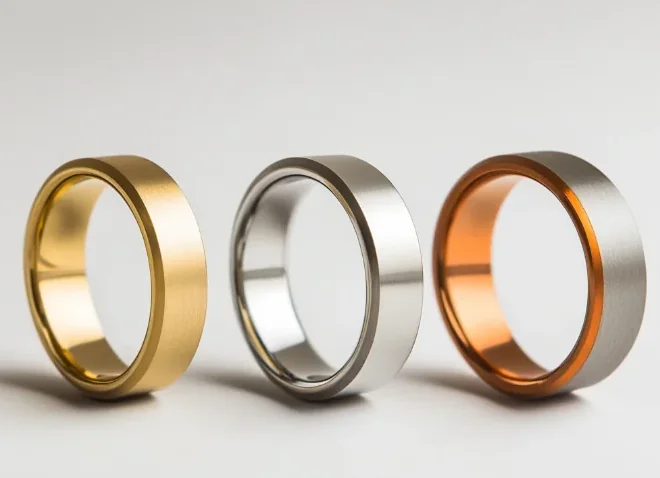
In the global fashion jewelry market, 316L stainless steel jewelry has transitioned from an alternative material to a dominant industry standard. For brand managers and procurement directors in Germany and across Europe, the material offers a compelling balance of durability and aesthetic versatility. However, a distinct paradox exists in the market: why do some stainless steel collections retail for tens of dollars while others command prices in the thousands?
The answer lies not just in the raw alloy, but in the engineering and manufacturing pathways chosen. For scaling brands, understanding how different combinations of manufacturing processes influence final product value is critical for accurate brand positioning.

Manufacturing Processes for 316L Stainless Steel Jewelry
To evaluate the quality of a supplier, one must look beyond the finished sample and understand the fabrication methodology. 316L surgical stainless steel body jewelry and fashion accessories rely on a synthesis of forming, connecting, and surface treatment technologies.
1. Forming Processes: Precision Meets Efficiency
The structural integrity of a jewelry piece begins with its forming process.
- Precision Stamping: This is the standard for high-volume efficiency. It is most suitable for flat components, pendants, and simple three-dimensional geometric shapes. For brands requiring large SKU quantities with consistent uniformity, stamping offers the most streamlined cost structure.
- CNC Machining:When a design requires complex three-dimensional structures or heavy, solid aesthetics, Computer Numerical Control (CNC) machining is utilized. Unlike stamping, CNC carves the piece from a solid block of steel. This ensures absolute precision, sharp edges, and a weightiness associated with luxury goods, ideal for men’s jewelry or high-end architectural designs.
2. Connection and Inlay Processes
How components are joined defines the longevity of the product.
- Laser Welding: 316Lstainless steel has low thermal conductivity. Laser welding utilizes this by delivering high-precision heat to fuse metals without damaging surrounding areas, creating seamless joints essential for high-end aesthetics.
- Precision Inlay: Securing stones in stainless steel is more challenging than in gold or silver due to the metal’s hardness. Advanced CNC settings and microscope-aided manual settingsallow for the secure inlay of zirconia or gemstones, elevating the perceived value of the steel.
3. Surface Treatment Processes
The “skin” of the jewelry is often the deciding factor for consumers, asking, Is 316L stainless steel good for jewelry regarding long-term wear?
- Texture Creation (Mechanical Treatment):Before plating, the steel surface is manipulated to create visual depth. This includes mirror polishing for a liquid-metal look, brushing for a contemporary matte finish, or sandblasting for an industrial texture.
- Advanced Chromatic Application (Plating):
PVD (Physical Vapor Deposition) Vacuum Plating: This is the industry benchmark for quality. PVD coatings form an atomic bond with the steel substrate. It is eco-friendly, hypoallergenic, and offers superior resistance to corrosion and wear. For the German market, where durability is paramount, PVD is the preferred choice for black, gold, and rose gold finishes.
How Process Combinations Define Market Positioning
For a brand, selecting a manufacturing route is a strategic decision that dictates pricing power. Here is how different process combinations create distinct product tiers.
1. The Fast Fashion Route
- Core Logic: Speed to market, cost optimization, and rapid style iteration.
- Process Combination:Precision Stamping + Water Plating/Basic PVD.
- Value Analysis: Stamping allows for massive production runs to meet high-volume SKU demands typical of trend-focused e-commerce. By utilizing standard PVD, brands can offer a wide spectrum of trendy colors that align with seasonal Pantone colors.
- Product Features: Highly fashionable designs with affordable entry price points and shorter lifecycles.
- Target Audience:Trend-seeking consumers who view accessories as disposable fashion complements.
2. The Mid-Range Design Route
- Core Logic: Quality assurance, design integrity, and durability.
- Process Combination: CNC Machining + Fine Brushing/Sandblasting + High-Grade PVD.
- Value Analysis:This route targets the “quality-conscious” demographic. CNC machining ensures that the structural details are crisp and precise. The addition of fine brushing or sandblasting highlights the material’s inherent industrial beauty. Crucially, high-grade PVD vacuum plating ensures the color withstands daily wear (sweat, perfume, water), answering the consumer demand for longevity.
- Product Features:Unique architectural designs with excellent craftsmanship that focus on the wearing experience.
- Target Audience: White-collar professionals and the middle-class demographic who value design and refuse to compromise on quality.
3. The Light Luxury Route
- Core Logic: Exclusivity, high perceived value, and investment-grade finishing.
- Process Combination: Mid-to-High-End CNC + Complex Inlay Craftsmanship + Hand Polishing.
- Value Analysis: This tier competes directly with demi-fine jewelry. It builds on top-tier textures but differentiates itself through micro-setting and claw-setting techniques usually reserved for gold. By securely setting real diamonds, semi-precious stones, or high-quality 5A zirconia, the hardness of stainless steel becomes a feature, holding stones more securely than softer silver.
- Product Features: Small batch production, ingenious design, and a combination of decorative appeal with tangible value retention.
- Target Audience: High-taste consumers seeking personal expression who value design complexity over the traditional intrinsic value of gold.
Is 316L Stainless Steel Jewelry Worth the Investment?
Determining 316L stainless steel jewelry’s worth and ROI requires a strategic approach to your supply chain. To choose the right process path, brands must evaluate three vectors:
- Self-Positioning: Define your core value. Are you selling volume (Fast Fashion) or a brand promise of durability (Mid-Range/Luxury)?
- Cost Structure Reality: Understand that CNC and PVD add to the unit cost and lead time,but significantly reduce return rates and warranty claims.
- Design Requirements: If your designs feature sharp geometric angles, stamping may not suffice; CNC is required.

Star Harvest: Your Partner in Precision Manufacturing
Navigating these manufacturing complexities requires a manufacturing partner who understands not just the metal, but the market.
At Star Harvest, we specialize in high-quality OEM jewelry solutions for medium to large-scale brands. With over 18 years of experience and a robust supply chain, we bridge the gap between design concepts and industrial reality. Whether your brand requires the efficiency of stamping for a seasonal collection or the intricate precision of CNC machining for a light-luxury line, our facility is equipped to deliver specifications that meet rigorous international standards, ensuring your products are manufactured with the precision your brand reputation demands.

