
For established and expanding Australian jewelry brands, the transition from boutique assembly to mass manufacturing is often fraught with a specific, silent danger: the “Manufacturer Mismatch.” This phenomenon occurs when a brand sourcing high-value gemstone bead necklace collections—utilizing premium Australian Opals, Lapis Lazuli, or Quartz—inadvertently partners with a factory whose infrastructure is built for low-cost promotional items.
The visual result is often deceptive. The stones may look exquisite upon arrival, but the structural integrity tells a different story. In the Australian market, where coastal lifestyles, humidity, and active wear test jewelry durability daily, a mismatch here is fatal. A clasp that tarnishes within weeks of exposure to ocean air, or a stringing wire that snaps under the tension of a “chunky” bead design, does more than cause a return; it erodes the brand equity you have spent years building.
Successful sourcing for the 2025 landscape requires a strategic alignment of your product’s “weakest link”—typically the metal findings and connection points—with your brand’s promise. If your Unique Selling Proposition (USP) anchors on “Ethical Luxury” or “Everyday Durability,” you cannot rely on supply chains optimized for single-use fast fashion. This guide outlines how to align material selection with brand positioning to secure a supply chain that supports growth rather than hindering it.
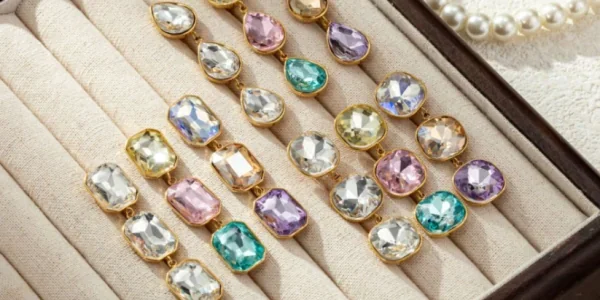
Market Trends and Consumer-Driven Material Selection
As we move into 2025, the Australian market is shifting away from the delicate minimalism of previous years toward “Bold & Maximalist” aesthetics. This shift has profound implications for material selection in gemstone beaded necklaces.
The Rise of Silver Tones and Hypoallergenic Demands
While gold tones remain a staple, there is a resurgence of silver-tone hardware mixed with colorful semi-precious stones. However, the modern consumer is more educated than ever regarding skin sensitivities.
The demand for hypoallergenic materials is rising, driven by a consumer base that rejects the irritation caused by nickel-heavy alloys. Brands must pivot toward materials like Stainless Steel (316L), which offers the cool tone of silver with superior resistance to the pitting and tarnishing common in cheaper zinc alloys.
Versatility: From Finished Pieces to DIY Ecosystems
A growing trend for 2025 is the “Customizable” or “DIY-adjacent” product line. Consumers are looking for semi precious gemstone bead necklaces that can be personalized—be it through adding charms, swapping pendants, or even restringing. This requires beads and metal components that are durable enough to handle repeated manipulation.
Materials like “clay beads” mixed with high-grade stone are popular, but they require precision-drilled holes and uniform sizes to ensure a premium feel, distinguishing a professional brand from a hobbyist kit.
The Expectation of “Heirloom Quality” in Fashion Jewelry
The “throwaway culture” is waning. Even in the “Demi-Fine” sector, Australian consumers expect longevity.
They are looking for beaded gemstone necklace designs that survive a summer of swimming and sunscreen. This necessitates a move away from standard flash plating towards PVD (Physical Vapor Deposition) coating on Stainless Steel, a technology that bonds the gold color at a molecular level, ensuring it withstands the harsh Australian elements.
Raw Material Procurement and Supplier Evaluation
For procurement managers at medium-to-large brands, selecting a supplier is no longer just about the lowest unit price; it is about risk mitigation and consistency at scale.
Competitive Pricing vs. Total Cost of Ownership
While unit price is critical, the “Total Cost of Ownership” includes the cost of returns, repairs, and brand damage. A supplier offering a gemstone bead necklace at a 20% discount is of no value if the metal components contain lead or if the gold plating fades in transit.
Procurement groups must evaluate suppliers based on their access to raw materials. Does the factory have direct relationships with stone mines? Do they process their own metal, or do they outsource it? Direct control over the raw material supply chain allows for better price stability and quality assurance.
Assessing Supplier Capabilities: The Technical Filter
When evaluating a potential partner, look beyond the showroom.
- Material Specialization: Do not ask an alloy factory to machine Stainless Steel. Steel requires higher processing temperatures, CNC machinery, and harder tooling. A factory lacking this infrastructure will produce sub-par components.
- Quality Standards: Ask for their QC protocols regarding “Tensile Testing” (pull strength of the wire) and “Artificial Sweat Testing.” The latter is crucial for the Australian market, ensuring the plating resists acidity.
- Scalability & R&D: Can they scale from 500 units to 50,000 without a drop in quality? A partner with a capacity of 3–4 million pieces annually ensures they can grow with you.
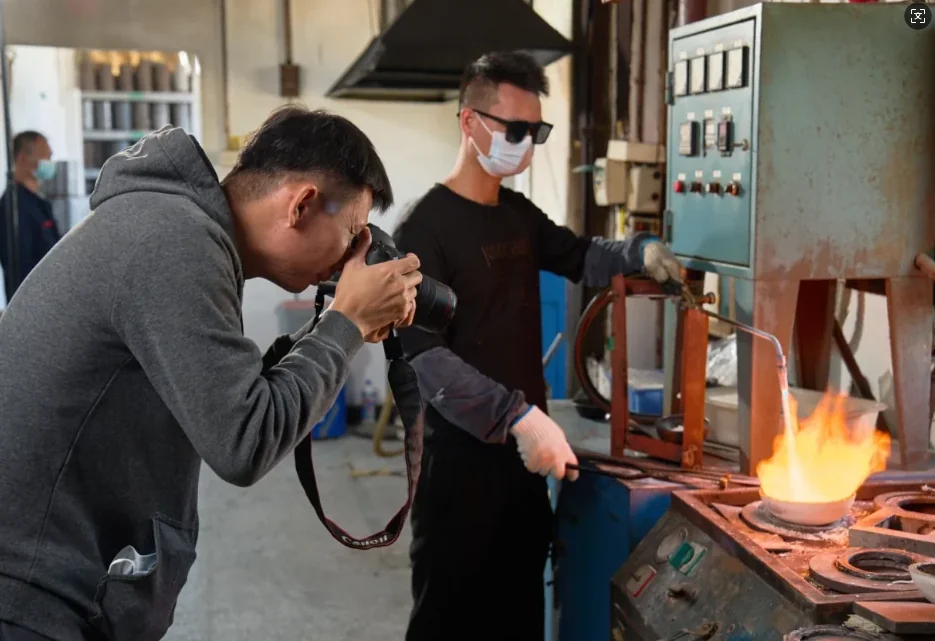
Service and Support: The Invisible Value
Finally, consider the supplier’s service infrastructure. Do they offer 3D rendering for custom toggles or charms? Can they provide samples within 7 days? In a fast-moving market, the ability to iterate designs quickly—moving from a sketch of a semi precious gemstone bead necklace to a physical sample—is a competitive advantage.
Partner with Star Harvest
For brands seeking to secure their supply chain with a partner that understands these high stakes, Star Harvest stands out as a premier manufacturer.
Unlike generalist factories that dabble in various low-grade metals, Star Harvest has built its reputation by rejecting the “cheap alloy” market to focus exclusively on high-quality Stainless Steel and Brass manufacturing.
Star Harvest is uniquely positioned to solve the “Manufacturer Mismatch” for Australian brands. Our adherence to the Responsible Jewellery Council (RJC) standards addresses the growing consumer demand for ethical transparency—a non-negotiable for many modern consumers.
Their technical capabilities are specifically aligned with the needs of high-end gemstone beaded necklaces:
- Durability Tech: They utilize proprietary PVD vacuum coating technology, achieving gold plating that is verified to withstand 3+ years of wear. This directly solves the common complaint of tarnished clasps ruining an otherwise beautiful stone necklace.
- Stone Sourcing & Customization:With an established network for sourcing natural gemstones and the capability for precision micro-inlay (setting stones with 0.3mm accuracy), they can execute complex designs that combine metal and stone seamlessly.
- Scalability: With a flexible MOQ starting at 500 pieces for distinct designs, yet backed by a massive 4-million-piece annual capacity, Star Harvest supports brands as they scale from niche market players to dominant volume sellers.
Contact us today for more information.

