قائمة
Your intricate designs demand precision molding. Our plaster casting technology captures every design nuance with zero bubbles, guaranteed structural fidelity for embossing, filigree, or 3D pendants—ensuring your signature piece retains its integrity from prototype to 10,000-unit runs.
Since 2005, star harvest has been leading the way in the design and manufacture of quality brass and stainless steel jewelry. We are committed to providing one-stop.
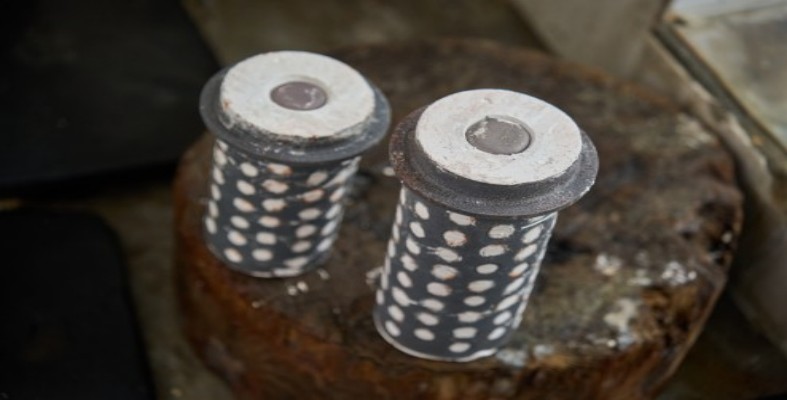
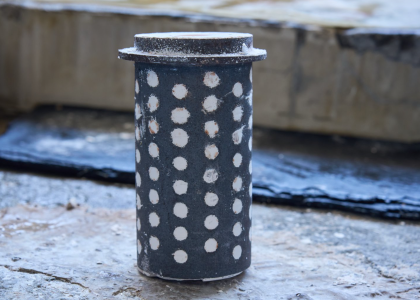
Gypsum slurry is mixed according to European and American environmental standards, vacuum degassed, and then poured into the wax mold frame.
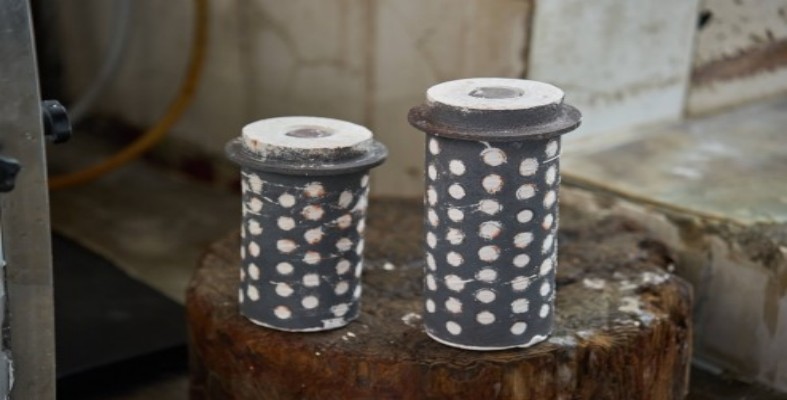
Drying is done in stages, completing dehydration and hardening within 72 hours to prevent cracking and deformation.
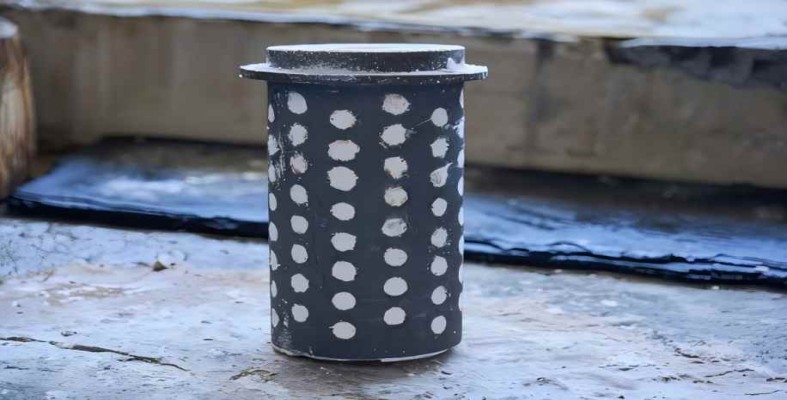
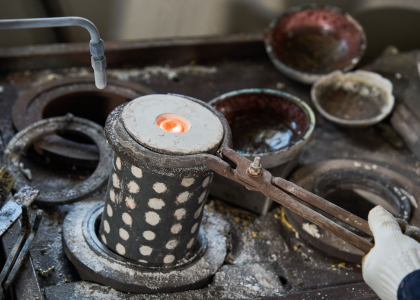
Molten brass/stainless steel is poured into a plaster mold, and a hydraulic shell crusher is used to non-destructively separate the casting.
Since 2005, star harvest has been leading the way in the design and manufacture of quality brass and stainless steel jewelry. We are committed to providing one-stop.
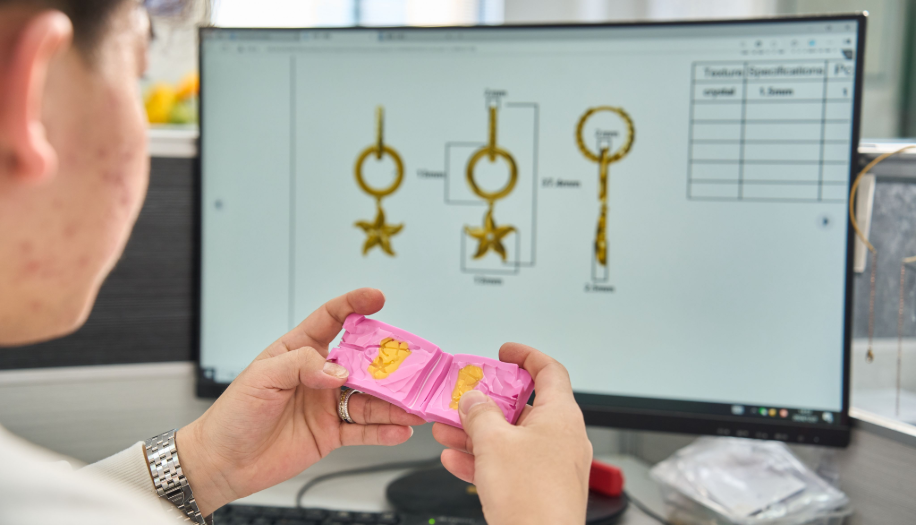
制作模具是珠宝制造的第一步,直接影响产品的精度和后续的生产效率。我们使用高弹性硅胶模具技术,完美复制复杂的设计细节,并为铜和不锈钢珠宝提供稳定耐用的生产模具。.
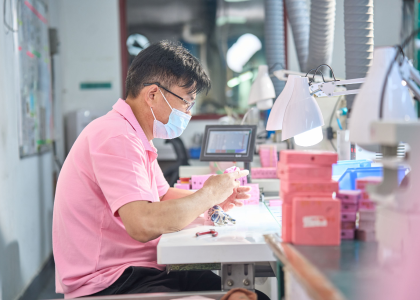
蜡注射是将液态蜡注入橡胶模具以形成高精度蜡模的关键步骤。此过程直接影响成品珠宝的细节还原和表面光洁度,适用于铜和不锈钢珠宝的精密铸造需求。.
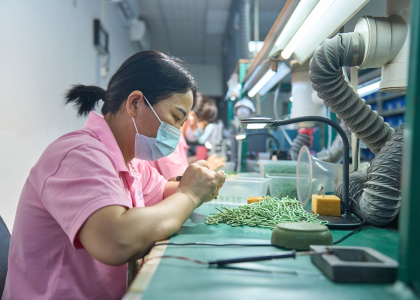
上蜡是精细处理蜡模型的关键步骤,以确保最终珠宝的表面光洁度和结构完整性。此过程适用于高精度铜和不锈钢珠宝的大规模生产,并能处理复杂的设计,如中空、细线和曲面。.
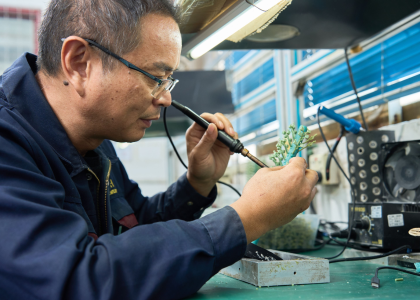
Treeing (also known as “wax tree assembly”) is a key step in splicing the trimmed wax model to the wax rod according to the requirements of the casting system. This process directly affects the metal fluidity and yield rate during casting, and is especially suitable for the mass production of copper and stainless steel jewelry.
Climbing a Tree professional solutions--xxx technology supporting the implementa….
eliminates burrs at sub-0.1mm precision.
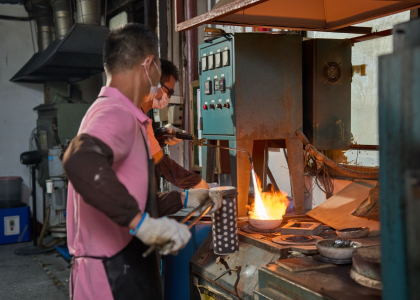
Sand casting is a small and medium-sized jewelry manufacturing process that uses sand molds to form jewelry. It is suitable for mass production of copper-based alloy and stainless steel jewelry. This process has low cost and fast mold turnover, and is particularly suitable for products with rugged or retro styles.
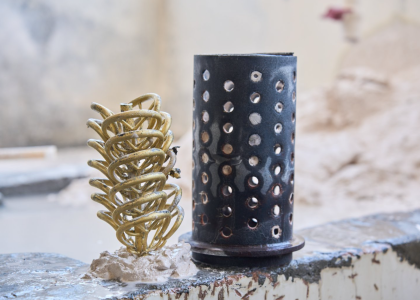
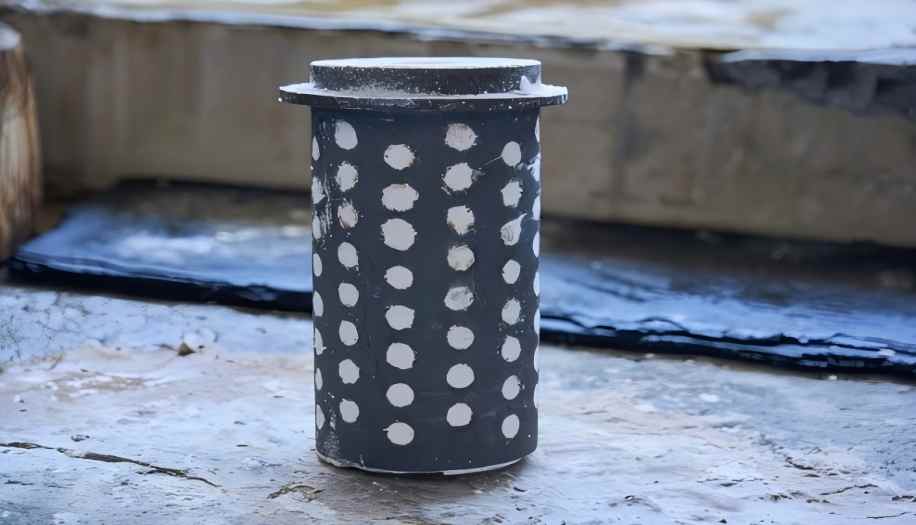
Plaster casting is mainly used for mass production of copper/stainless steel jewelry with complex carvings and hollow structures. Plaster molds have excellent thermal stability and detail restoration capabilities, and the demoulding quality directly affects the surface fineness of the casting.
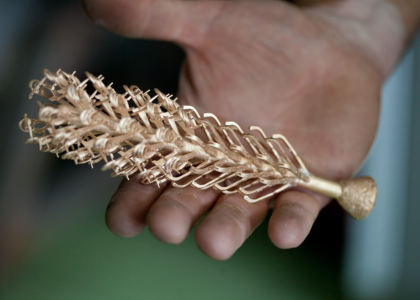
Dewaxing is a key step in lost wax casting, which directly affects the surface quality and detail restoration of the casting. The wax pattern is removed through precise temperature control to provide a clean cavity for subsequent metal pouring.
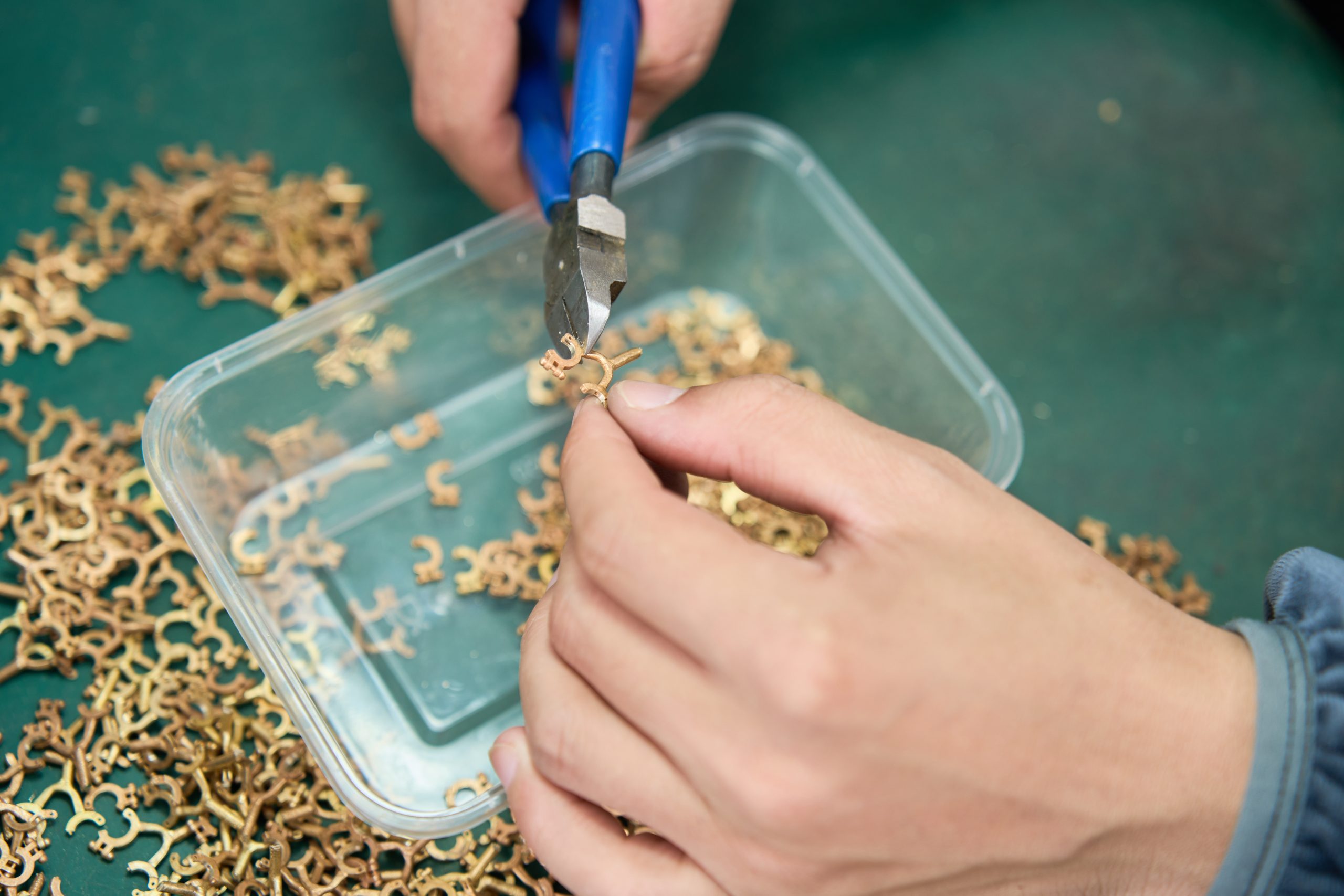
The assembly process is the final stage of jewelry production, which directly affects the integrity and wearing comfort of the finished product. This process is suitable for key processes such as component connection, clasping, and assembly after polishing of copper/stainless steel jewelry to ensure that the product meets the quality standards of the brand.
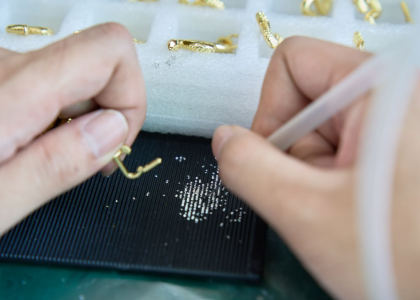
Brazing & Soldering is a key process for connecting metal parts in jewelry manufacturing, which directly affects the firmness and appearance integrity of the product. It is suitable for precision welding of copper and stainless steel jewelry to ensure that there is no cold solder joint, discoloration or solder overflow at the joint.
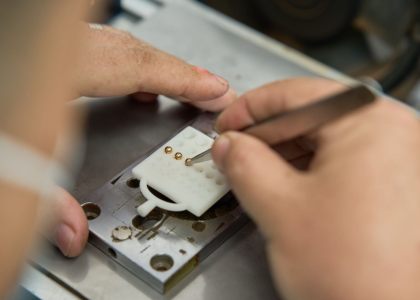
Forming & Shaping is a key process to ensure that the finished jewelry meets the designed size and is comfortable to wear. It is suitable for curvature adjustment, structural correction and surface optimization of copper and stainless steel jewelry to avoid the risk of breakage caused by deformation or stress concentration.
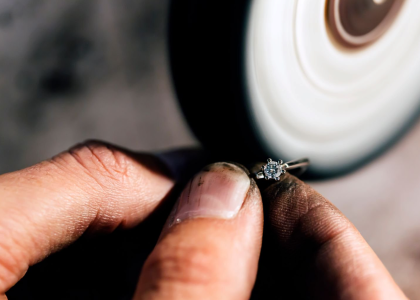
Mold Polishing & Finishing is a fine processing step in jewelry manufacturing. It is responsible for removing burrs, pores and joint lines after mold casting, improving surface finish and shape accuracy, and ensuring that the product meets design requirements and subsequent processing needs.
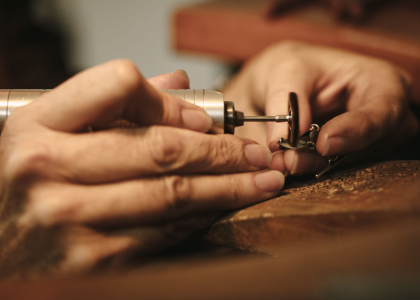
Grinding & Lapping is a key process for precision finishing of metal jewelry surfaces, eliminating tool marks, oxide layers and microscopic bumps, and providing a qualified base surface for subsequent polishing/electroplating. It is mainly used for batching, welding and structural interfaces of copper and stainless steel materials.
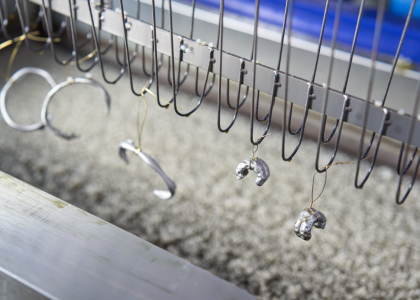
Copper plating is a process of electroplating a copper layer on the surface of a jewelry substrate (stainless steel/zinc alloy/silver). It is mainly used for:
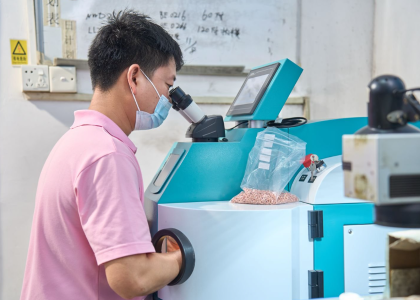
O tipo de processo de impressão usa tecnologia de gravação a laser ou estampagem mecânica para formar uma marca clara e permanente na superfície da joia, atendendo às necessidades de logotipo de marca, marca de material metálico (como prata 925) e marca de certificação de conformidade. Este processo suporta gravação de alta precisão de 0,1 mm e é adequado para materiais comuns de joias, como cobre e aço inoxidável.
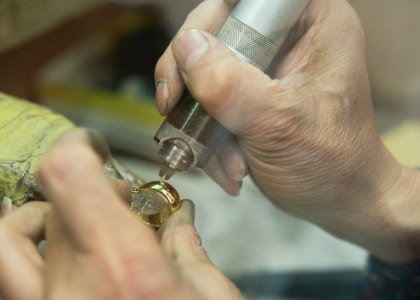
O polimento é usado para melhorar o acabamento e o brilho da superfície da joia, remover marcas de processamento (como marcas de torneamento, pontos de solda) e fazer com que o produto apresente diferentes efeitos, como espelho, fosco ou escovado. Este processo utiliza uma combinação de métodos mecânicos e químicos, adequado para cobre, aço inoxidável e outros metais, e atende aos padrões de qualidade de aparência dos mercados europeu e americano.

O processo de eletrodeposição forma uma camada protetora metálica na superfície da joia através de deposição eletrolítica, alcançando resistência à oxidação, resistência ao desgaste e personalização de cores (como platina, ouro rosa, preto fosco, etc.). Este processo está em conformidade com os padrões ambientais RoHS/REACH, é adequado para substratos de cobre e aço inoxidável, e pode atender aos rigorosos requisitos dos mercados europeu e americano para espessura de revestimento (0,5-5μm) e resistência à corrosão.
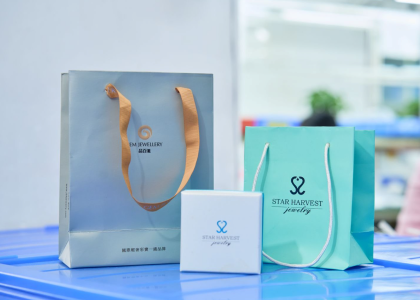
O processo de embalagem afeta diretamente a segurança do transporte do produto, o efeito de exibição da marca e a experiência de desembalagem do cliente. Oferecemos soluções de embalagem que atendem aos padrões ambientais europeus e americanos (papel certificado pelo FSC, materiais biodegradáveis), adaptando-se a diferentes tipos de produtos (peça única/conjunto), necessidades logísticas (transporte marítimo/aéreo à prova de umidade) e requisitos de personalização da marca (impressão de LOGO, inovação estrutural).