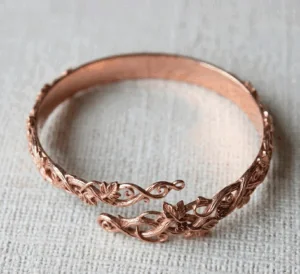
Every jewelry brand buyer knows this moment. A reorder lands, and the gold tone looks off compared to what’s already on shelves. Warmer, cooler, or just not quite right. The retail buyer notices. The customer complains. And the cost of that mismatch traces back not to a brand decision, but to a gap at the factory. This article breaks down how color consistency actually gets managed across production runs, so you know what to look for in a jewelry factory before your next reorder.
Why Color Consistency Is Harder Than It Looks
Plating isn’t like stamping or casting, where a fixed tool guarantees the same dimensions every time. Color comes from chemistry, current, temperature, and time, and each of those variables drifts on its own schedule.
Gold itself isn’t one color. “18k gold” tells you purity, not tone. The actual hue depends on the ratio of gold to cobalt, nickel, or other agents in the plating bath. Swap the base metal from brass to stainless steel and the same bath solution can read differently, because the base surface changes how light reflects off the final layer.
Micron thickness matters too. A thin layer looks lighter and less saturated; a thick layer reads deeper and richer. So even with identical bath chemistry, a shift in thickness across a batch shows up as a color shift. And baths change on their own between runs. They age, get partially topped up, and drift chemically. Without active calibration, the bath that nailed the approved color in run one won’t reproduce it in run two.
The Four Pillars a Reliable Jewelry Manufacturer Should Have
Pillar 1: Reference sample retention. A physical approved sample from every production run should sit in controlled storage, labeled with its run data, and get pulled out as the comparison standard at the start of every reorder. It sounds basic, but plenty of factories skip it, and the result is a color drift nobody catches until the goods ship.
Pillar 2: Bath chemistry documentation. Chemical concentrations, temperature, and electrical parameters need a record for each run, along with any adjustments made mid-run. A factory that links these logs to specific approved samples has a real starting point for a reorder. One that relies on an operator’s memory doesn’t.
Pillar 3: Micron thickness verification. X-ray fluorescence, or XRF, is the standard non-destructive method for plating thickness measurement in the jewelry industry, and it can read gold layers down to a fraction of a micron without damage to the piece. Your purchase order should define a specific micron range, not just “gold plated.” A fashion piece might sit around 0.3 to 0.5 microns, while a demi-fine line often calls for 0.5 to 1.0 microns or more. Ask for XRF reports on production samples before the full batch runs, not after.
Pillar 4: Pre-production color sign-off. A small batch gets plated first, compared to the retained reference sample under standardized lighting, and formally approved before bulk production starts. Catching a shift at this stage costs a short delay. Catching it at final inspection costs a shipment.
What Brands Should Specify Before They Sign Off on a Reorder
Define color with a physical standard, not a phrase. “Warm yellow gold” means nothing on paper. An approved sample or a Pantone reference does. Put micron thickness in your PO as a contractual range. Request XRF reports as a standard deliverable with every run, not a special favor. Keep your own reference samples in your own storage, separate from the factory’s, so you have an independent standard if a dispute comes up. Build a pre-production approval step into every reorder, and ask whether your factory’s base metal supplier has changed, since a supplier swap can quietly shift your plating color.
How to Evaluate a Jewelry Factory Before You Place a Reorder
A few direct questions tell you a lot. Do they keep physical samples from every run as color references, and can they show you the system? What documentation exists for bath chemistry, and can they produce a sample record? How do they verify micron thickness, and do they have a sample XRF report on hand? Is there a formal approval step before bulk plating on a reorder? And is plating done in-house, since outsourced plating tends to be the single biggest risk factor for color drift?
Why Star Harvest
에서 스타 하베스트, we built our process around these exact checkpoints. We retain physical samples from every production run in controlled storage with full run labeling, so a reorder always has a reference to match against. Our bath chemistry records track concentration, temperature, and electrical parameters per run, tied to the approved sample from that run.
Thickness verification happens in-house with XRF equipment, and we provide test reports as standard documentation rather than an added request. Every reorder goes through a pre-production plating batch, checked against the retained reference under D65 daylight-standard lighting, before bulk plating starts. And because our plating runs in our own facility, there’s no subcontractor variability between what gets approved and what gets shipped.
Final Thought
Color consistency isn’t luck, and it isn’t a matter of finding a jewelry factory that “gets it right most of the time.” It’s a documented, repeatable system. Before your next reorder, ask your custom jewelry manufacturers the questions above. If the answers are vague, that’s your signal. If you’d like to see our reference sample and XRF documentation process firsthand, reach out to our team.